
For many, camaraderie, a sense of belonging, and mutual respect define U.S. military service. But for Wells, ME, resident Michael Cataldi, his experience was quite different.
Michael graduated from high school in 2002 and briefly considered college, but his grades weren’t where they needed to be. Reflecting on his school years, he described them as awkward, feeling like he never quite fit in. Additionally, as a teenager, he was diagnosed with ADD and prescribed medication to help manage it.
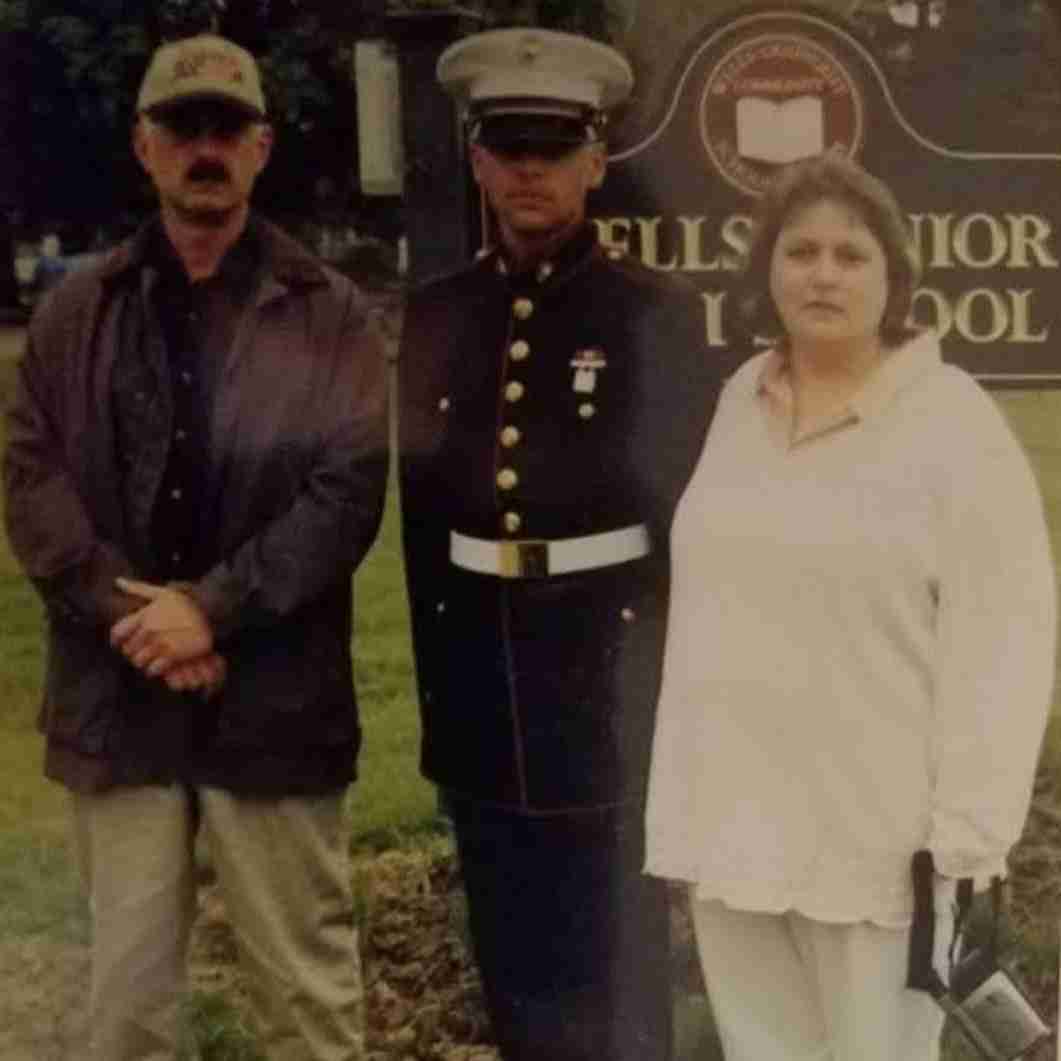
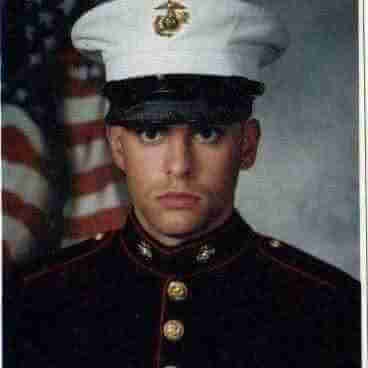
Michael pursued his dream of joining the Marine Corps, which he did just six months after graduation.
“I was moved by the acts on Sept. 11, 2001, and I wanted to bring justice to terrorism,” he added.
Since Michael had been successful in working on cars and other maintenance projects from a young age, he enlisted in the military with the goal of becoming a diesel mechanic.
Raised by a stepfather in law enforcement, Michael was accustomed to a disciplined environment and believed he would adapt well to military life.
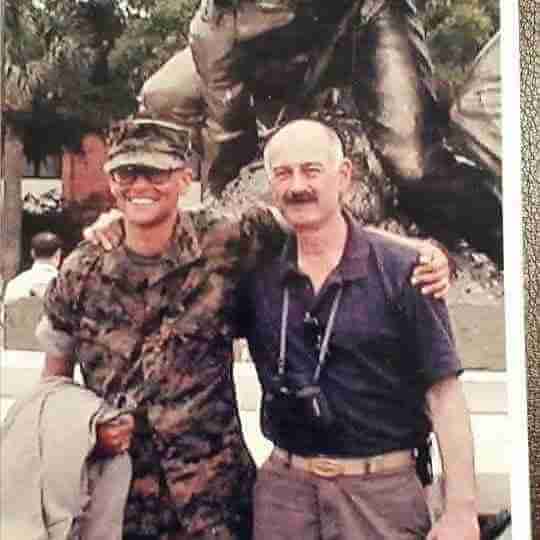
The first time Michael was on a plane, in fact, was when he was in the Marine Corps; he very much enjoyed seeing the Rockies as he traveled to the West Coast to his first duty station in the Mojave Desert.
While training in the high desert of the Mojave, Michael had an epiphany: “Wow, I’m here training for war.”
What would transpire the next several years would be some of the most difficult times of Mike’s life. However, through the support of veterans programs, including Warrior PATHH training at the Travis Mills Foundation Veterans Retreat, Michael eventually found the tribe that he had been searching for a community that understood his struggles, supported his healing, and helped him rediscover his purpose.
Military Service
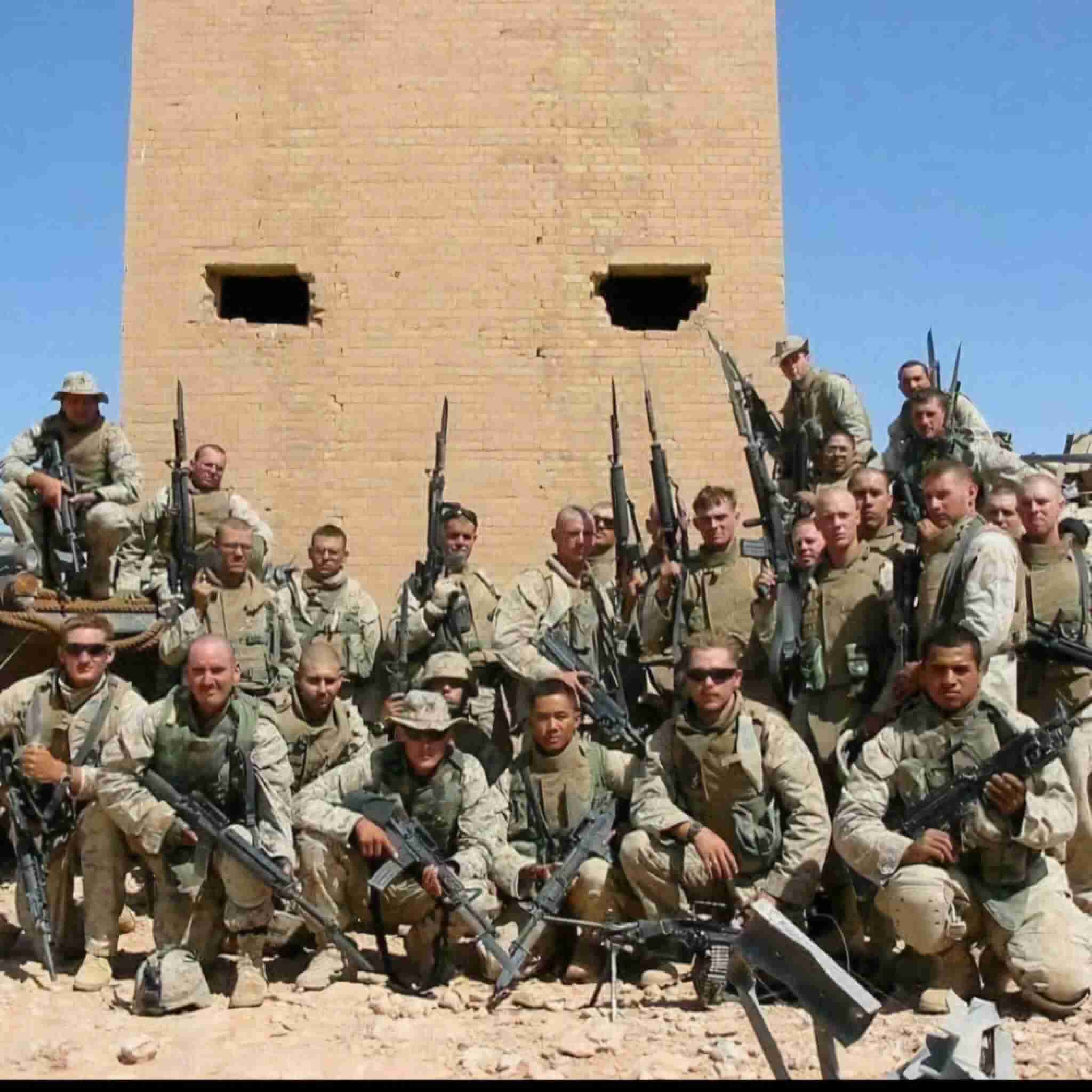
Michael deployed to Iraq twice; the first was in 2004 when he served as a diesel mechanic in a reconnaissance unit.
“When I wasn’t turning wrenches or recovering disabled vehicles, I was doing vehicle checkpoints, clearing buildings, and apprehending detainees,” he said, adding that other times, he’d serve as a vehicle commander or gunner.
“I could be pretty versatile,” Michael said.
He vividly remembers waking up for the first time in the Middle East, the echoing call to prayer from nearby mosques marking the start of an experience he would never forget.
“It was really powerful,” he said, describing it as primordial.
While on a security watch in Al Anbar province, Michael’s unit received a call about a helicopter that disappeared.
“We went to the last position where the helicopter had been located,” he said, adding that it had hit the ground at full speed, killing 31 people.
“There was nothing left,” he recalled.
After that incident, Michael wasn’t the same.
“I started to notice I was a little off,” he said. “Even the guys I was serving with noticed.”
While Michael immediately sought help with a regimental psychiatrist, he soon regretted it.
“They ostracized me,” he said. “Even the guys I was in combat with didn’t want anything to do with me.”
While Michael had felt like an outcast for most of his life, the Marine Corps reinforced that after he reached out for help.
In a session with the psychiatrist, he described what he was feeling:
“‘Sir, I’m tying my boots and I’m noticing that I’m above my body, almost like I’m watching myself in a movie.’”
Rather than receiving the support he needed, Michael was advised to suppress his feelings and was simply prescribed medication.
Michael’s symptoms weren’t going away, however, so before his next deployment to Iraq, he was put on a heavier dose of medication. He also started to drink heavily after he was injured in a training accident.
Additionally, before he deployed for the second time, Michael, 21, learned that he was going to be a father. More trouble lay ahead, unfortunately, as three months into the deployment, his medications ran out.
“The medical officer left the unit and didn’t tell anybody that I was on medication,” Michael said. “So I ended up running out of psychotropics cold turkey.”
There’s a month of time that Michael doesn’t remember before being Medevaced to a combat stress center.
“I found out that the medications weren’t even in country,” he said, adding that he’d even lost control of bodily functions.
“I was really alone.”
To make matters worse, the Marine Corps attempted to court marshall Michael for his actions. Arriving back in the United States from deployment in 2006, Michael could have medically retired, but he was ill advised and was told that it would have been considered a dishonorable discharge.
“So, I kept my mouth shut and got out of the Marine Corps in 2007 with an honorable discharge,” he said.
After returning to California, the relationship with his wife became worse. Coupled with the poor economy in 2008, Michael was hopeless.
“I dove heavy into the bottle,” he said. “I was abusing painkillers, my prescription medications.”
As a result, Michael tried to commit suicide by taking an entire bottle of Klonopin and driving the freeway as fast as he could. Also at this time, Michael had ballooned to about 300 pounds.
Rock Bottom
By 2011, Michael was separated from not only his wife and children, but his family in Maine. While he was working 100 hours a week, he was only bringing home 20 hours worth of pay.
“It was awful,” he said. “I was living at a truck stop across the freeway from my job.”
“It was humiliating,” he added.
When Michael’s stepfather learned that Michael was homeless, he acted without hesitation. He quickly wired money to cover food and a hotel stay, then arranged a plane ticket to California to bring his son home.
Unbelievably, he and Michael’s mother had divorced only months earlier. Despite that, the bond they shared was strong and the two came back to Maine together.
“He was my best friend.”
A New Start?
When Michael arrived back in Maine, he lived with his father.
“He really tried to get me on my feet, but I was still abusing painkillers and alcohol,” he said. “I ran through women quicker than the days changed. I had no friends. I didn’t talk to my kids. I could barely get up and shower.”
In 2012, while working at a truck dealership in Portland, Michael had a supervisor who genuinely cared about his well-being.
“He said, ‘Mike, I can see you’re having some physical issues. I can see you’re struggling. Why don’t you go get some help? I’m not firing you, I’m just telling you to go get some help.”
It seemed that this was a turning point for Michael.
His therapist suggested getting a dog, which the VA eventually certified as a service dog. Michael married again – six days after meeting his partner. However, Michael struggled with this relationship as well, eventually finding himself homeless once again. He spent several nights at the rest stop in Kennebunk, ME, until reconnecting with his mother, who took him in.
Michael got on his feet and shortly after, he met his third wife, whom he is currently married to.
“We hit it off right away,” he said, adding that they went to high school together. “She really pushed me from the beginning.”
Michael’s wife not only encouraged him to wean off his medications but also supported him in rebuilding relationships with his parents and children.
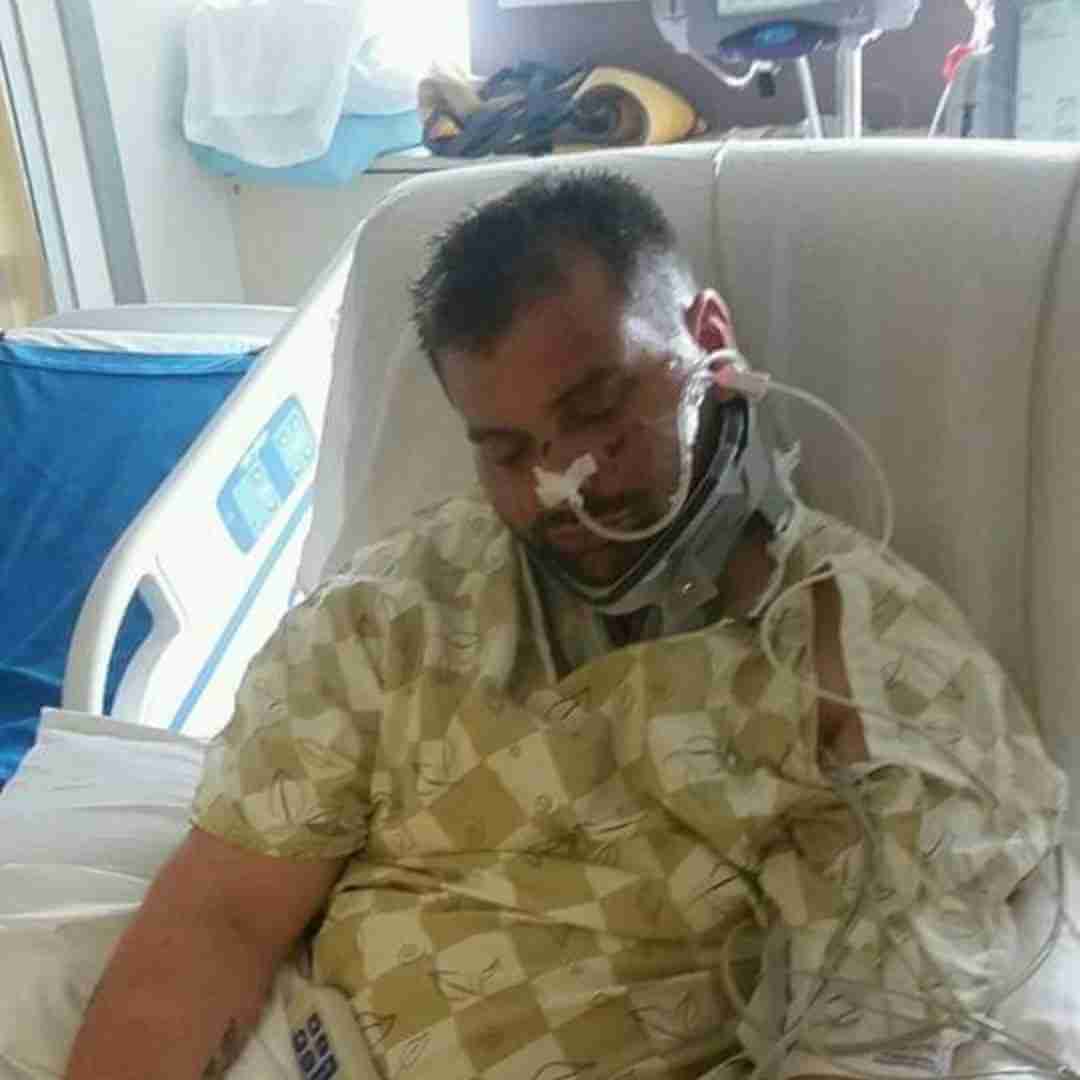
In 2015, Michael’s life changed once again when he was in a moped accident.
“Of all things,” he said, adding that when he awoke, he couldn’t continue the medication he’d been taking because of a seizure risk.
Michael’s depression and anxiety were so overwhelming that each morning, he woke up feeling like he didn’t want to go on.
“I put a pistol in my mouth and I went to pull the trigger,” he said. “My wife, Morgan, pulled the gun out of my mouth and said, ‘We need to get help.’”
Michael and his wife sent emails to a couple organizations.
“ I said, ‘I’m done. I’m going to kill myself.’ I heard crickets,” he said, adding that Semper Fi & America’s Fund (The Fund) was the only organization to respond.
“The following day there was a newly retired Marine Corps colonel at my house,” he added.
The colonel had helped stand up the branch’s Wounded Warrior Regiment program that helps wounded, ill, and injured Marines and their families transition to civilian life or return to duty. He just started working for The Fund.
“That didn’t exist when I was in the Marine Corps,” Michael said, adding that the very same colonel who showed up to his house, was commanding officer of that unit that had the tragic helicopter crash during Michael’s first deployment to Iraq.
“They saved my life,” Michael said of The Fund, adding that through this organization, he found the Shepherd Center in Atlanta, which addressed a number of health issues Michael experienced.
Michael stayed at the Center for three months where he tried Botox for his migraines, which worked very well. The Center also re-evaluated his medications.
“The doctor in charge of the program looked at me and he goes, ‘You’re on a deployment dose. They wanted you numb,’” Michael said, adding that he’d been on the dose for 10 years. “‘This is making you worse.’”
Michael was grateful for what he learned at the Shepherd Center and decided to take part in its race from Boston to Atlanta to raise funds for its mission.
“The clients for the program were allowed to run the last few miles,” Michael said. “I thought, ‘I’m a Marine, I can run 3 miles.’ At 300 pounds, it was a little hard on the body though.”
Michael finished the race, and while his body hurt, it was an important moment: At the end of the race, he was thanked for his service, where he found his “Why?.”
“That was the first time I truly took it to heart instead of brushing it off,” he said.
“Since then, I’ve felt it,” Michael added. “I’ve used that as my ‘Why?’ There are people who want to help [Veterans]. The least I could do was put in effort to show my appreciation.”
With the unwavering support of his wife and their families, Michael gradually found his path to healing. He began volunteering at his father in-laws’ veterinary practice, primarily working with horses and exploring Eastern medicine, chiropractic care, and herbal treatments.
In 2018, he went to a brain mapping clinic where he saw a neurologist and acupuncturist who suggested that Michael eliminate gluten and dairy from his diet.
“With that change, I was able to come off all medications and the inflammation in my body went way down,” Michael said. “My joints felt better so I started road cycling. I also started going to the gym. With that, my mood improved and my high blood pressure went down.”
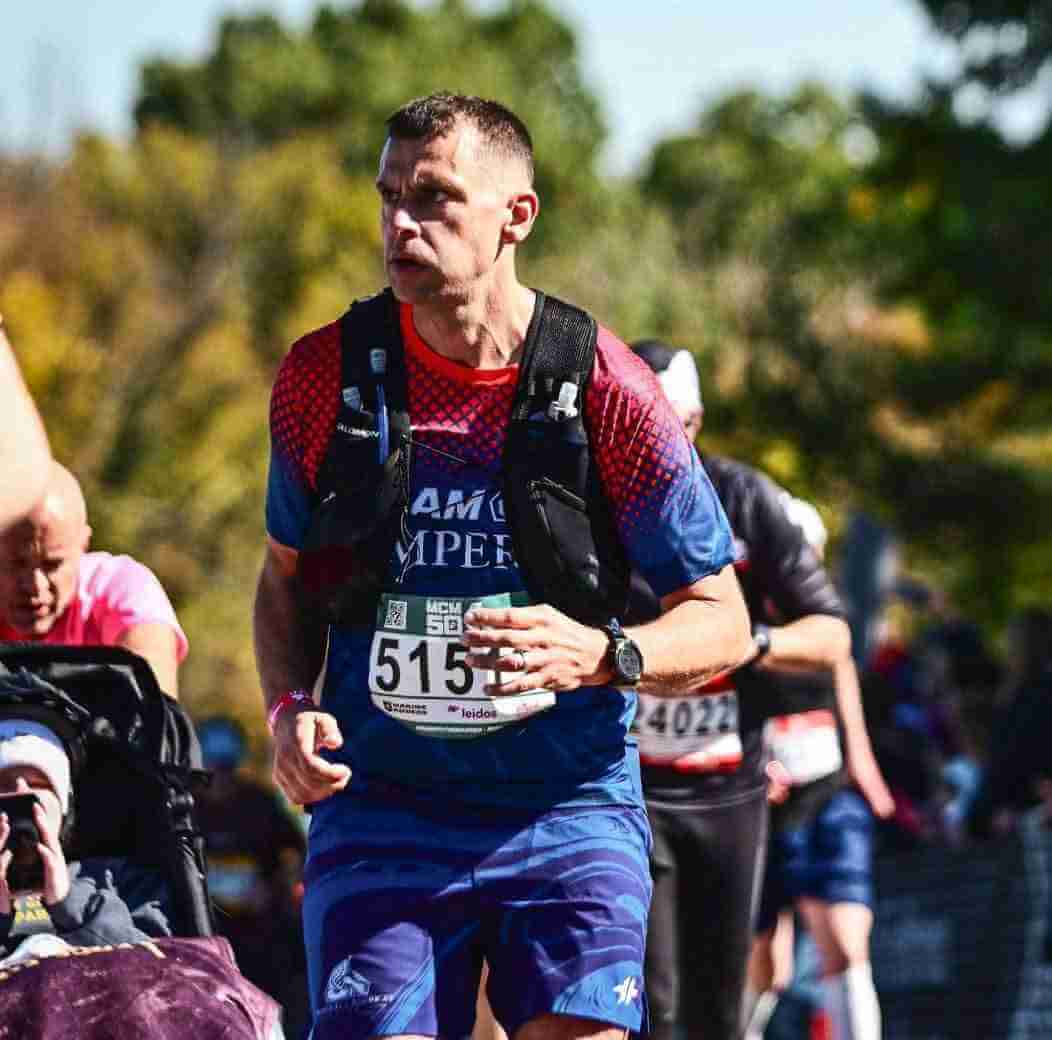
In 2020, when the COVID-19 pandemic forced his gym to close, Michael refused to let it hold him back—he took up running instead.
At 200 pounds, Michael was running, but his knees hurt. That was quickly remedied by changing his form, however.
“I ran my third marathon this past October,” he said, adding that it was an ultramarathon. His next race is the Marine Corps Marathon in October.
Michael’s relationship not only with his wife and children improved, but he remains close with his ex wife and step daughter as well. Michael’s daughter is studying astro physics on the West Coast and his son, in high school, loves Junior ROTC.
As far as how Michael feels about the military, he still feels hurt.
“The Marine Corps was awful to me, it treated me like a number, but I’ve realized that it didn’t know any better,” he said. “Like I said, I’ve been an outcast most of my life. I was the weird kid, and the Marine Corps reinforced that.”
Michael continues to enjoy trips with the Semper Fi & America’s Fund; he’s done sea kayaking alongside orcas in Washington State, golfing in Alabama, mountain biking in Idaho, skiing in Colorado, and more.
Finding the Right ‘PATHH’
While Michael was doing arguably better than he’d done in his entire adult life, something was still missing. In January 2024, he attended the seven-day in-person initiation at the Travis Mills Foundation Veterans Retreat in Rome, ME.
It was in PATHH training that Michael realized that while his structured physical routine was good for his body, it wasn’t doing anything for his emotional health.
“I lived in this structured routine, but I got rid of emotions,” he said. “I didn’t have to think about anything. I just existed.”
It was a pattern that Michael realized not only went back to his service to the Marine Corps, but also to his childhood, being raised in a strict household.
A PATHH Guide at the Retreat helped Michael put what he was doing into perspective.
“I was weaponizing my practices,” he said. “PATHH is still a journey but I’m learning how to let go of some things and shift others.”
Michael now serves as a volunteer PATHH Guide in the Warrior PATHH Program at the Travis Mills Foundation Veterans Retreat—a role he describes as a two-way street, where he not only shares knowledge with students but also learns from those he guides.
A student in one of the classes Michael was teaching was a police officer whom Michael had interactions with as a civilian.
“He cut me a break when I didn’t deserve it,” Michael said. “I told him this, how it impacted me, and he was able to let his guard down, and open up more.”
Michael said connections like that are not only what Warrior PATHH is about, but it’s also the key to living a fulfilled life.
“I definitely feel like I belong,” Michael said of his place in Warrior PATHH at the Travis Mills Foundation. “I’ve found my tribe.”