
Executive Director
“Recalibrate” is a word used often among the staff, volunteers, and participants at the Travis Mills Foundation, and its meaning has grown since the Veterans Retreat opened in 2017. Contrary to common belief, recalibration isn’t limited to those with amputations—it’s about adjusting to a new normal, whatever that looks like for each individual.
The combat veterans and first responders who complete Warrior PATHH training are recalibrated. Through Progressive & Alternative Training for Helping Heroes, they learn to transform their struggles into strengths, equipping them to thrive in the aftermath of trauma. A veteran’s spouse undergoes their own recalibration when they embrace self-care, rest, and relaxation, finding balance and renewal alongside their partner’s journey.
Each year, the Travis Mills Foundation embarks on its own form of recalibration, continually refining and enhancing its seven Signature Programs to better serve participants and their evolving needs. In 2024, we grew Retreat programming and expanded opportunities for veterans by collaborating with like-minded organizations across the country, offering programs that directly address the unique needs of veterans. These initiatives include songwriting workshops, Struggle Well training tailored for first responders, and a transformative program designed specifically for female veterans, fostering personal growth, rest, and meaningful connections.
Looking ahead to 2025, the Travis Mills Foundation is setting bold and ambitious goals for the future, to benefit those struggling because of Post-Traumatic Stress. In addition to increasing programming, TMF, with partners from Boulder Crest Foundation and Avalon Action Alliance, will develop a training center in Maine where veterans and first responders can start on their own paths to achieving lifelong Post-Traumatic Growth through Warrior PATHH training.
First introduced at TMF in 2019, the program has seen such high demand that TMF is expanding its offerings to accommodate the growing number of heroes eager to transform their lives.
However, we can’t achieve this without your help. Please consider donating to the Travis Mills Foundation to support the expansion of our life-changing programs on our Maine campus.
Approximately 6 percent of Americans will be diagnosed with post-traumatic stress, while for veterans, that number is estimated to be twice as high. The Travis Mills Foundation is committed to addressing these often invisible wounds. We not only recognize that trauma leaves marks that aren’t always visible, but we also know that it affects the entire family. We’re taking meaningful steps to support our nation’s heroes, and their families, in their healing journeys.
In 2024, we invite YOU to help create lasting, positive change for the post-9/11 recalibrated veteran community. Whether it’s by volunteering to serve our nation’s heroes, organizing a fundraiser to support our mission, or becoming a dedicated recurring donor—your involvement makes a direct impact. Together, we can strengthen and uplift those who have those who have given so much in service to our country.
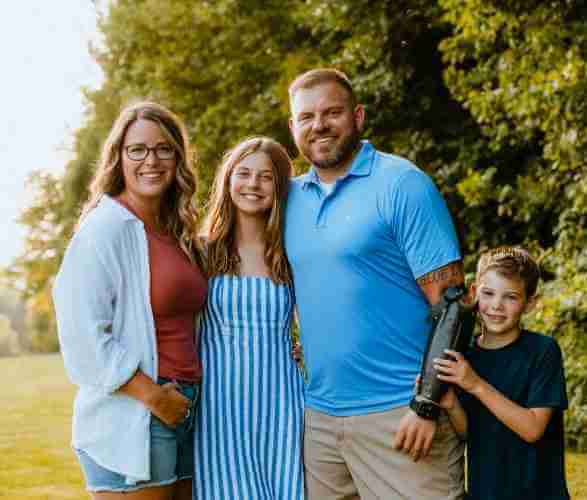
SSG Travis Mills | Founder, President, Recalibrated Veteran
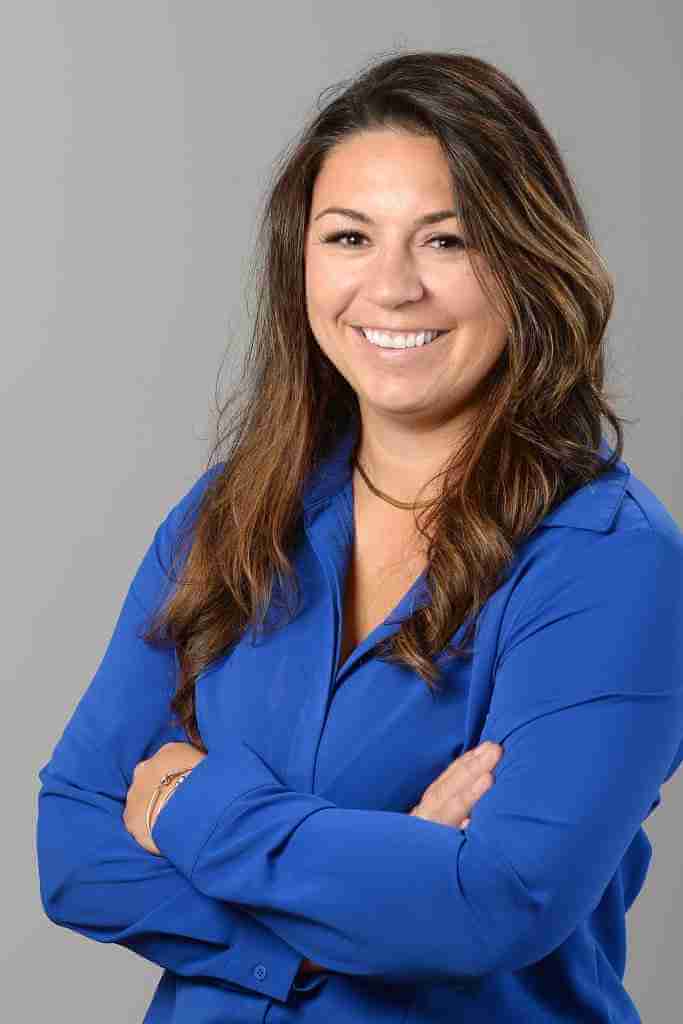
Heather Labbe | Executive Director
Warrior PATHH is Growing!
Training Center to Open in 2025
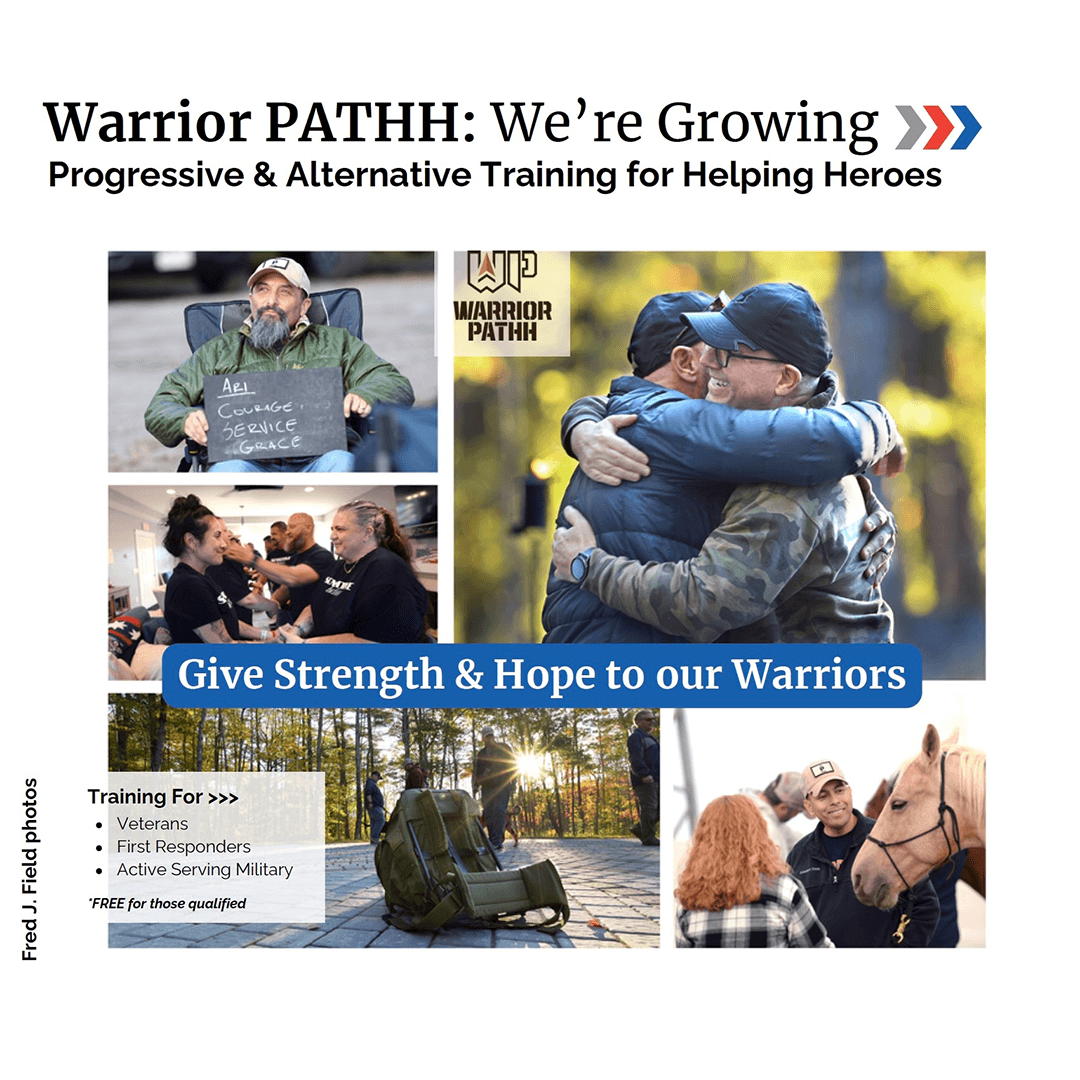
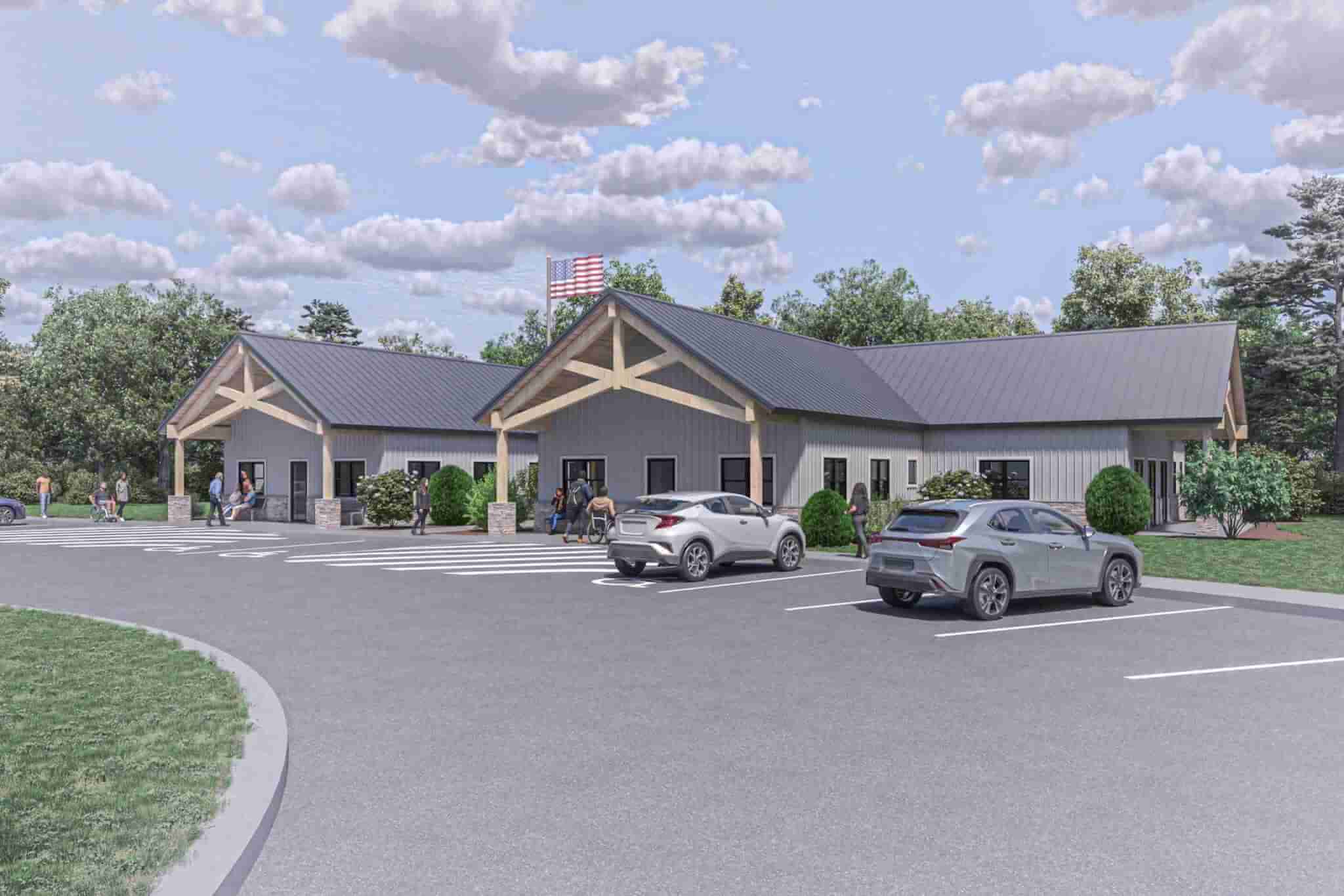
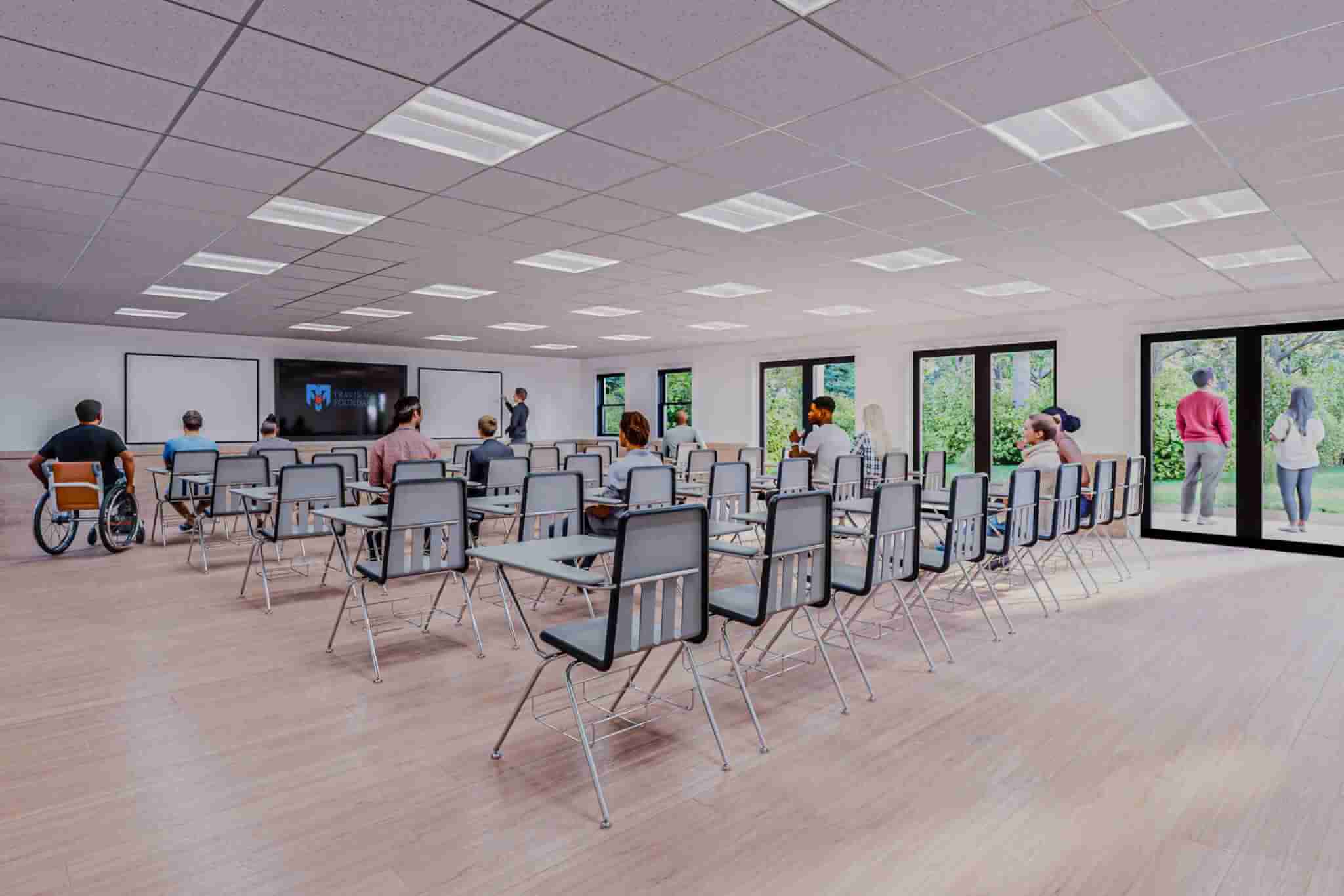
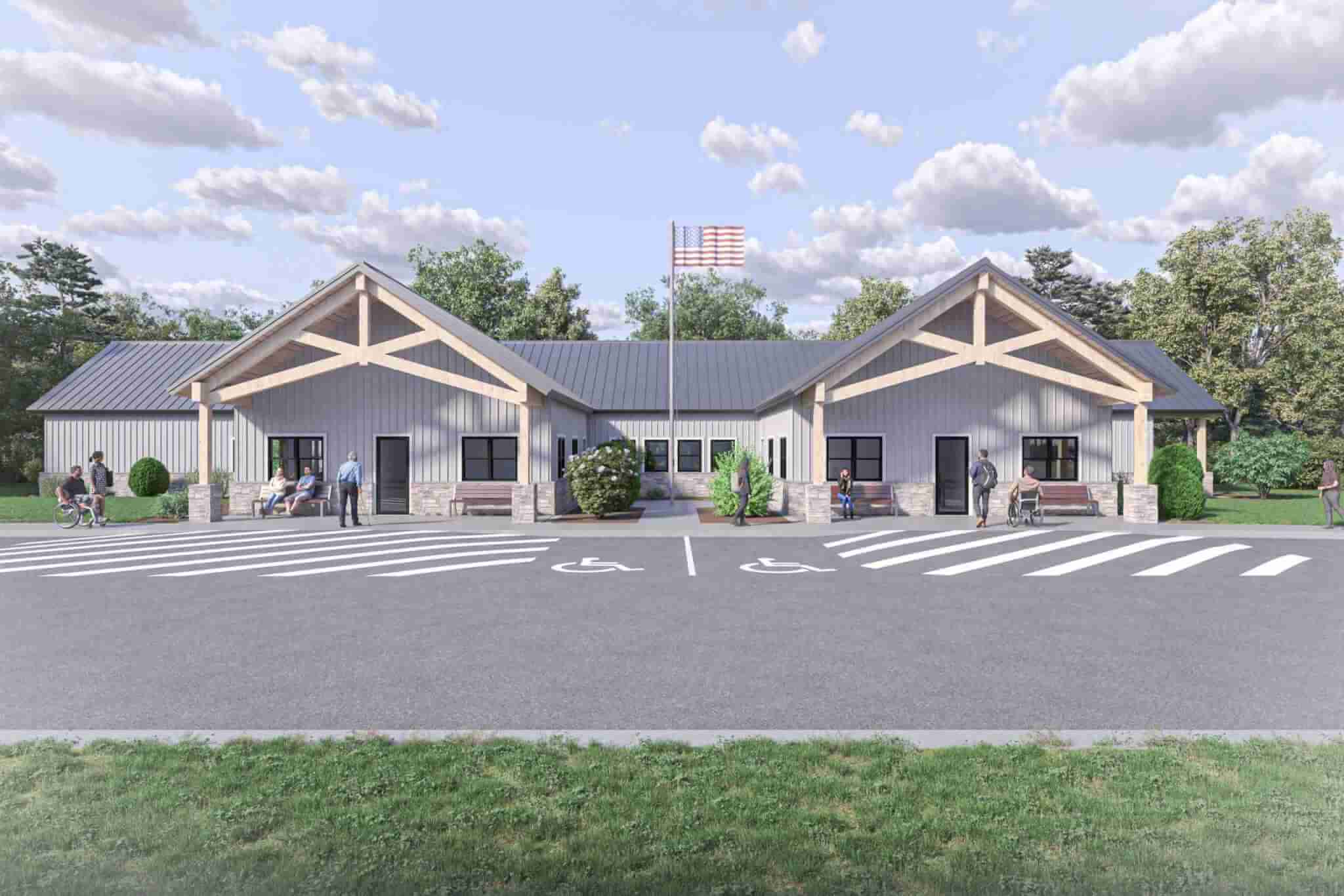
In 2025, the Travis Mills Foundation is expanding its Warrior PATHH training for veterans and first responders in New England. This $3 million, 5,300 square-foot project will allow us to serve two times the PATHH students TMF currently serves – up to 300 more people per year.
The plan includes utilizing existing apartments on the property and adding a classroom, large meeting room, two break-out rooms, 4 offices, a conference room, and commercial kitchen.
Please consider being part of this life-changing addition to the Travis Mills Foundation Veterans Retreat by making a donation to support Post-Traumatic Growth. Naming opportunities are available and a fitting way to recognize the legacy and contributions of TMF’s most loyal supporters. Spaces can be named in honor of donors, PATHH graduates, and loved ones who have proudly served our nation.

Determination, Resilience and Triumph
Amputee Veteran Finishes Last at Miles for Mills
Nick Koulchar’s story begins with the kind of quiet determination that’s built from family responsibility and a search for purpose.
“I joined the military in 2006,” he said, after taking a pause to think back. “I would have been 26.”
When asked what inspired him to join, Nick explained that the military was always on his radar, even in high school.
“I’d looked at the military when I was in high school, but my dad got sick my senior year. I stuck around to take care of him, and after he passed, I stayed to help with my younger brother.”
Nick paused again, reflecting on the years that followed, where he tried to navigate life in his hometown of Montrose, Michigan, a small community outside of Flint.
“Once my brother was off to college and I realized I wasn’t really figuring life out… I just didn’t have any more excuses. I was missing that sense of purpose, teamwork, and camaraderie I used to get from playing team sports.”
It was that longing for structure and meaning that ultimately led Nick to enlist.
“The military was calling to me,” he said simply.
Service to His Country
Nick served as a combat engineer and gunner in the United States Army. His role was a critical one—clearing routes to protect his fellow soldiers from improvised explosive devices (IEDs). It was during one of these missions that Nick’s life changed forever.
“We were clearing routes for other missions and operations to go off successfully,” he explained. “We got hit.”
When asked what went through his mind in those harrowing moments, Nick admitted, “Initially, we knew we were going to get contact in that area. It wasn’t a matter of if but when.”
His injury, sustained while mounted in a vehicle, marked a turning point in his life – he would later learn that he was a double amputee. However, in recounting the story, Nick’s focus wasn’t on his injury, the pain, or fear. Instead, it was on the mission he had been entrusted with and the sense of duty that brought him there in the first place.
When the vehicle was hit, all electronics shut off.
“As gunner, I was looking over the front of the vehicle,” Nick said. “Once we got hit and everything went dark, I went from looking over the vehicle to falling straight down.”
Nick thought he might have broken his leg and that the vehicle was still operational.
“Then the vehicle kind of drifted off the road and crashed into a large wall,” he added. “At that point, I knew things were much worse than I originally thought.”
The truck commander informed Nick that their driver was critically injured, while Nick informed him to crawl over his body to provide aid to their driver. At that time, he told Nick that he, too, was critically wounded.
“I told him to crawl over me and do what he had to do because he wasn’t going to hurt me any more than I already was,” Nick said. “He crawled over me and I started dragging myself to the back of the vehicle to get out.”
By the time Nick reached the back of the vehicle, a medic jumped in to tourniquet both of his legs. However, the tourniquets weren’t big enough to stop the bleeding in Nick’s legs.
“I was a very big guy then,” he said, adding that fellow soldiers used their belts as tourniquets.
Nick and the vehicle’s driver were transported to a Medical Aid Station. Throughout the chaos, Nick learned that the driver wasn’t going to survive.
“They were scrambling to save him,” Nick added, “but I knew it wasn’t going to happen.”
As Nick started to lose feeling in his hands, he told the medical staff to hurry.
“I was starting to fade,” Nick recalled quietly. “The last thing I remember is being airlifted by helicopter, staring up at the stars in the night sky. I kept thinking, ‘I’m not going to die—I can’t leave my younger brother alone.'”
Nick was transported to a medical facility in central Baghdad, where he underwent multiple surgeries before being airlifted to Landstuhl, Germany. He remained in a coma for two weeks, and his condition was so critical that he stayed in Landstuhl longer than most soldiers. Nick had been stationed in Germany and during this time, a dedicated group of military wives, took turns watching over him around the clock, ensuring he was never alone.
When Nick finally awoke from the coma, he was back in the United States at Walter Reed National Military Medical Center, and it was Sept. 10, 2008.
“I wondered why all the Sept. 11 stuff was on TV,” he said. “I got hit in August – so it was like a time warp.”
Nick’s first instinct was to ask what he needed to do to get back to being mission-capable. It was in that moment that the doctors broke the news—he had lost his legs.
“I was like, ‘Get me some metal legs—let’s do this,’” Nick recalled. “When you’re out of the fight, it feels like your team’s at risk, and all you want is to do whatever it takes to help them succeed.”
“Truthfully, this is when my journey really began.”
Recovery
Nick recovered at Walter Reed for two and a half years, learning to how to walk again, among other challenges.
“I tell people that it’s like living a life, and then being reborn as a baby,” he said.
Learning to walk again didn’t come easily to Nick.
“There came a point where I needed to just get out of the hospital and go live my life, and so for me, that was in a wheelchair,” Nick said.
“In the beginning, I was very prideful,” he said. “I said I’d never crawl on the ground.”
Nick soon realized that if he wanted to achieve certain goals, he’d have to adapt—crawling up stairs or across the floor when necessary. He was determined to push his limits and discover what he was still capable of.
In 2013 Nick got into CrossFit, which he said was great, since it’s all about functional movement.
“It taught me how to move my body and build strength in ways I hadn’t before,” he said. “By learning how to adapt my workouts, I found it became highly relevant to my daily life. This journey led me into competitions and advocating for adaptive athletes in the CrossFit world.”
Nick and a group of fellow amputees actively pushed CrossFit to include adaptive athletes, a shift that the organization now embraces.
He eventually transitioned into doing Spartan races, which Nick said are as challenging mentally, as they are physically. He completed his first race in a wheelchair, adapting to obstacles as needed. He even crawled an entire Spartan Race at American Family Field, the stadium where the Milwaukee Brewers compete. He’s gone on to complete similar races throughout the country, including at Fort Liberty and Fenway Park in Boston, along with crawling the desert-scape in Texas for a race.
“I didn’t account for the cactus and snakes in that one,” he said, adding that race took him nearly 20 hours to complete.
As much as Nick loved competing in races, they would have to be put on hold. He had the opportunity to have osseointegration surgery, which attaches a prosthesis directly to the bone of the residual limb instead of using a socket.
At the time, this type of surgery was being performed in Europe, and Walter Reed had recently initiated FDA trials, receiving approval to treat a limited number of patients with the procedure. Nick knew the lead surgeon on the team and passed the required physical and mental screenings to become a viable candidate.
Now married and starting a family, Nick had surgery on the Tuesday after Thanksgiving in 2017. By December 23, he was back in Michigan, ready to celebrate Christmas. After several months of physical therapy, numerous trips to Washington, D.C., and the second phase of his surgery, Nick was adjusting to life with a growing family while relearning to walk for the first time in a decade.
“I was able to stand up right away,” he said. “I felt stronger and more balanced than I ever did in a traditional socket.”
The first time he stood it was on short legs and he picked up his 1-year-old son and held him up over his head.
“That was something,” Nick added.
In 2019, Nick completed his first 5K on his new legs. Though it was a slow but gratifying race, shortly after, a severe infection was discovered in his leg, necessitating a return to Walter Reed for treatment. Nick’s hospital stay extended longer than anticipated, and as COVID began to impact the U.S., his urgency to return home grew increasingly intense.
The team at Walter Reed consulted with Ann Arbor VA Medical Center and Nick left Washington, D.C., driving his own car and with a pick line in his arm and three doses of antibiotics.
“I drove from D.C. straight to Ann Arbor VA where they gave me another dose of antibiotics in my pick line,” he said, adding that he arrived home after midnight on Valentine’s Day.
Nick didn’t walk for the rest of 2020, but he was resolute in his determination to walk again in 2021.
From 2021 to the present, Nick has seized every opportunity to use his legs.
“There’s a steep learning curve and I’m still figuring it out,” he said.
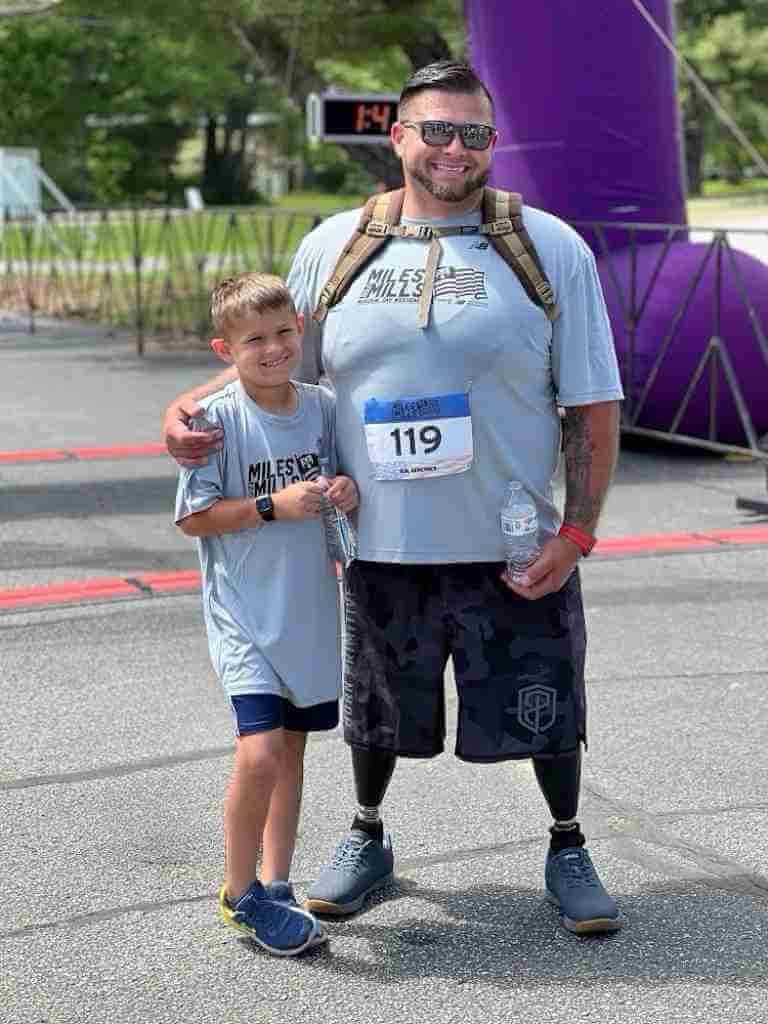
In May, he completed the Miles for Mills Memorial Day Weekend 5K, crossing the finish line as the final competitor, with his family and TMF staff by his side throughout the course.
“We did it in an hour and 45 minutes and I was really shocked,” he said. “I thought it’d take at least two and a half, three hours.”
Nick was met at the finish line by his fellow Travis Mills Foundation participants, staff, and Founder, U.S. Army SSG (Ret.) Travis Mills.
“It felt really great,” Nick said. “Unforgettable.”
Progressive & Alternative Training for Helping Heroes
Survival: from Wilderness to PTG
Dani Beauchemin’s love for the outdoors has been a defining force in her life, shaping her journey from a curious child in Girl Scouts to a seasoned survivalist, search-and-rescue expert, and FEMA reservist. From a young age, she was drawn to the wilderness, envious of her brother’s Boy Scout adventures and exploring bushcraft by age 10.
Thanks to the Travis Mills Foundation and Warrior PATHH training, she has also developed a deep understanding of Post-Traumatic Growth—where, much like in survival challenges, mental resilience proves to be key.
Progressive & Alternative Training for Helping Heroes provides training for first responders and veterans that helps them transform struggle into strength and thrive in the aftermath of trauma. Based on the science of Post-Traumatic Growth, training reinforces that when we’re forced to reflect on our lives and make sense of the destruction caused by trauma, struggles can become a catalyst for change.
Dani, a Portland, Maine resident, believes that the greatest rewards come from confronting fears – which is exactly what she did as a Warrior PATHH student at the Travis Mills Foundation Veterans Retreat. One of the TMF’s newest PATHH Guides, Dani is eager to give back to a program that lifted her from isolation and support students who are at the start of their paths to reshaping pain into purpose.
“It feels like the ultimate purpose and service,” she added.
Survivalist Niche
From a young age, Dani was drawn to the wilderness, envious of her brother’s Boy Scout adventures and exploring bushcraft by age 10. Her career took an unexpected turn in 2014 when she found herself on national television, participating in survival challenges that pushed her to her limits. Oftentimes underestimated at the start of shows, including, “Naked and Afraid,” Dani became known as a fierce competitor, representing the bushcraft community and standing out as a vegetarian.
It was in 2016 that Dani moved to Iceland to get a Masters Degree in Environmental Science.
A vegetarian since age 4, Dani has received much positive feedback about her diet from fans of the shows, which now span 10 years.
“It’s been a privilege to be an advocate and represent that minority,” she said.
When Dani started appearing on survivalist shows, she figured it would be one and done.
“In a trillion years, I never thought I’d end up on TV for any reason,” she said, adding that she continues to be asked to appear on shows in various survival situations, and is looking forward to future challenges.
“It’s been most rewarding because the bushcraft and survival communities are very small to begin with,” she said, adding that she was the youngest person to appear on the 40-day “Naked and Afraid XL.”
Although Dani has often felt like the underdog in many challenges, she finds it incredibly rewarding to prove to herself that she’s adaptable and capable of rising to the occasion when tested.
Dani recalls her most challenging experience in Ecuador’s Amazon rainforest during monsoon season, where constant rain and psychological strain tested her endurance.
“We would make a fire and it would just turn to ash. One of us had to constantly tend to it,” she said. “It was like taking care of an infant.”
In the rainforest, a thick canopy of trees covers the land, which Dani describes as an “umbrella of darkness.”
“We didn’t see the sky, sun or the stars for 21 days,” she added.
In most challenges, predators are a real threat to survival, but an even more dangerous adversary is the demons within your own mind, Dani said.
“They’re going to come out and you have to confront them,” she added.
Despite the hardships, Dani emerged stronger, learning to confront personal challenges head-on.
Dani’s involvement in survival shows, including “Naked and Afraid,” is just one aspect of a life filled with adventure. The New Jersey native moved to Iceland in 2016 where she studied arctic alien invasive plant species and environmental studies and obtained her master’s degree. In addition to the four-year program, she studied in Iceland for another year studying Icelandic language.
“It was probably one of the scariest things I’ve done, but I did it for no other reason but to improve myself,” she said, adding that a quote by Joseph Campbell serves as an inspiration for how Dani lives her life: “The cave you fear to enter holds the treasure you seek.”
“I have a fear of missing out on a great opportunity,” she added. “I like to say ‘yes,’ even if it means moving across the world.”
Canine Search and Rescue
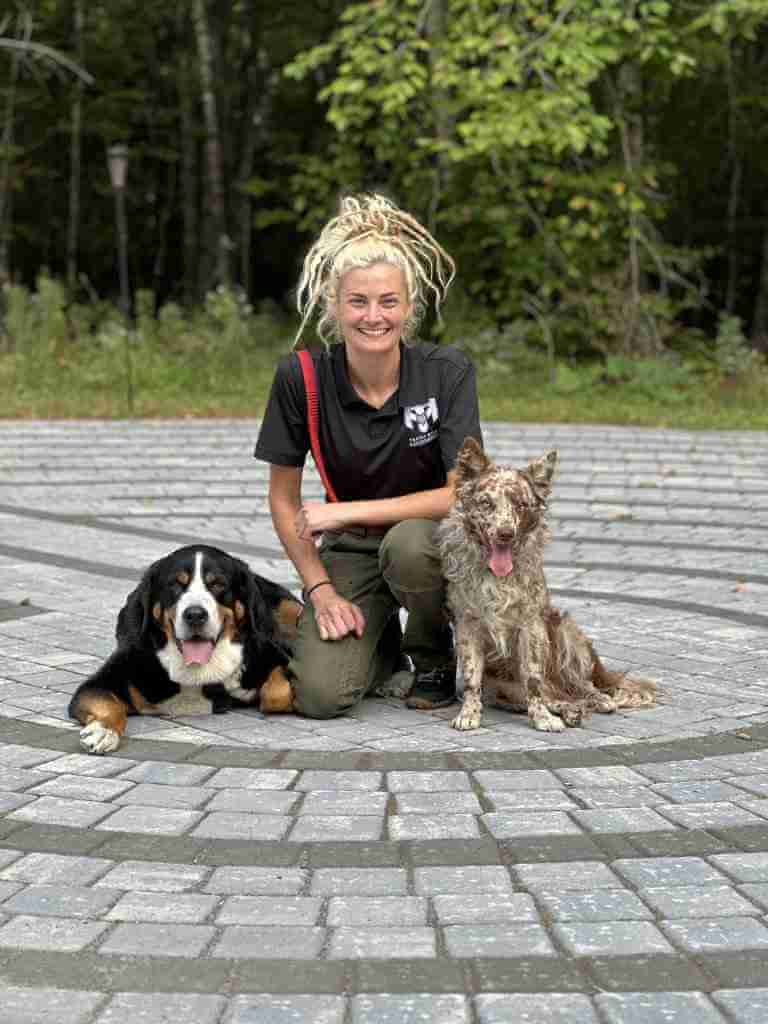
Dani has been deeply committed to search-and-rescue work for many years, partnering with her dog, Xena, 13 – now retired – a Greater Swiss Mountain Dog, who excelled in cold-weather rescues.
As an animal lover, Dani didn’t just want a pet—she wanted a companion she could train and grow with. Search and rescue work not only strengthens the bond between her and her dog but also provides both with a shared purpose and a meaningful way to serve their community.
After Xena’s retirement, she and Dani shared one last adventure, participating in a survival show filmed in Rangeley, Maine. Now, Dani works with Fen, a 2-year-old Hungarian Mudi. While Fen is following in Xena’s footsteps, his skills differ: at 20 pounds, he’s much quicker than Xena’s 115-pound frame and specializes as an air-scenting dog, perfect for fast-paced rescues.
The search-and-rescue work Dani has done with Xena, and now with Fen, is all volunteer-based. While it may be a hobby for Dani and her canine partners, the rewards are significant.
“You’re constantly building your own character and skill set,” she says. As an outdoor enthusiast, this training not only enhances her abilities but also gives her a sense of safety in the wilderness and confidence in responding to emergencies.
Warrior PATHH
When Dani came to Warrior PATTH in Spring 2024 at the Travis Mills Foundation, she considered it a last resort. An incident at her job in emergency management had led Dani down a dark path of depression, anxiety, and isolation.
“I lost all sense of who I was,” she said. “I lost my purpose.”
Dani had also lost confidence in herself, along with the inability to trust her own thoughts.
“I wasn’t taking care of myself,” she added. “I couldn’t even find the energy to get up and go anywhere.”
She saw doctors, psychologists and other specialists and while it was helpful, it didn’t give her the motivation she needed to reset her thinking or grow from the trauma she experienced. Dani said her existence was hanging on by a thread of discipline, which she used to get herself to the Travis Mills Foundation Veterans Retreat in the Belgrade Lakes Region of Maine. The week-long Warrior PATHH initiation proved to be just what she needed.
“I never would have thought I would have seen so much growth in such a short amount of time,” she added.
At the start of this transformative week, Dani quickly realized that while each woman’s trauma was unique, the fellow veterans and first responders in her group shared many of the same symptoms of post-traumatic stress. This common ground fostered a deep sense of connection and understanding among them.
“I was not only able to be vulnerable, but I could share my feelings and not be afraid,” she said.
Warrior PATHH training, which continued virtually for 90 days after initiation, resonated with Dani, in a number of ways, and was happy to accept a position as a PATHH Guide at the Travis Mills Foundation as it builds a new training center in central Maine.
Dani knows that her Warrior PATHH training will be a factor in her next survivalist challenge in 2025, and conversely, that the survivalist training she’s completed with aid her in guiding others down the path to lifelong Post-Traumatic Growth.