
Erik and Zaneta Mossberg had a big decision to make in 2019 years after Erik was injured during a 2011 deployment to Iraq.
“I lost 60 percent of normal blood flow to my foot,” he said. “And I spent 18 months at the Mayo Clinic trying to save my leg.”
For months, Erik had issues with blood clots in his injured leg. It was when one of those clots traveled through his body and to his heart, that Erik realized changes needed to be made.
“It almost killed me,” he said.
Erik experienced 27 blood clots, including the one that went to his heart, and some that traveled to his lungs, and all were tracked back to his left calf.
“My calf would feel like it was going to explode,” he said, adding that as doctors tried to save his leg for 18 months, the fear regarding the clots was constant.
“The next blood clot could have gone to my brain,” he said, adding that he considered his wife and his children when making the decision to amputate.
“There were a lot of dark days in the beginning – the recovery was really hard,” Za-neta said, “But we knew it was the right decision and we felt at peace with it.”
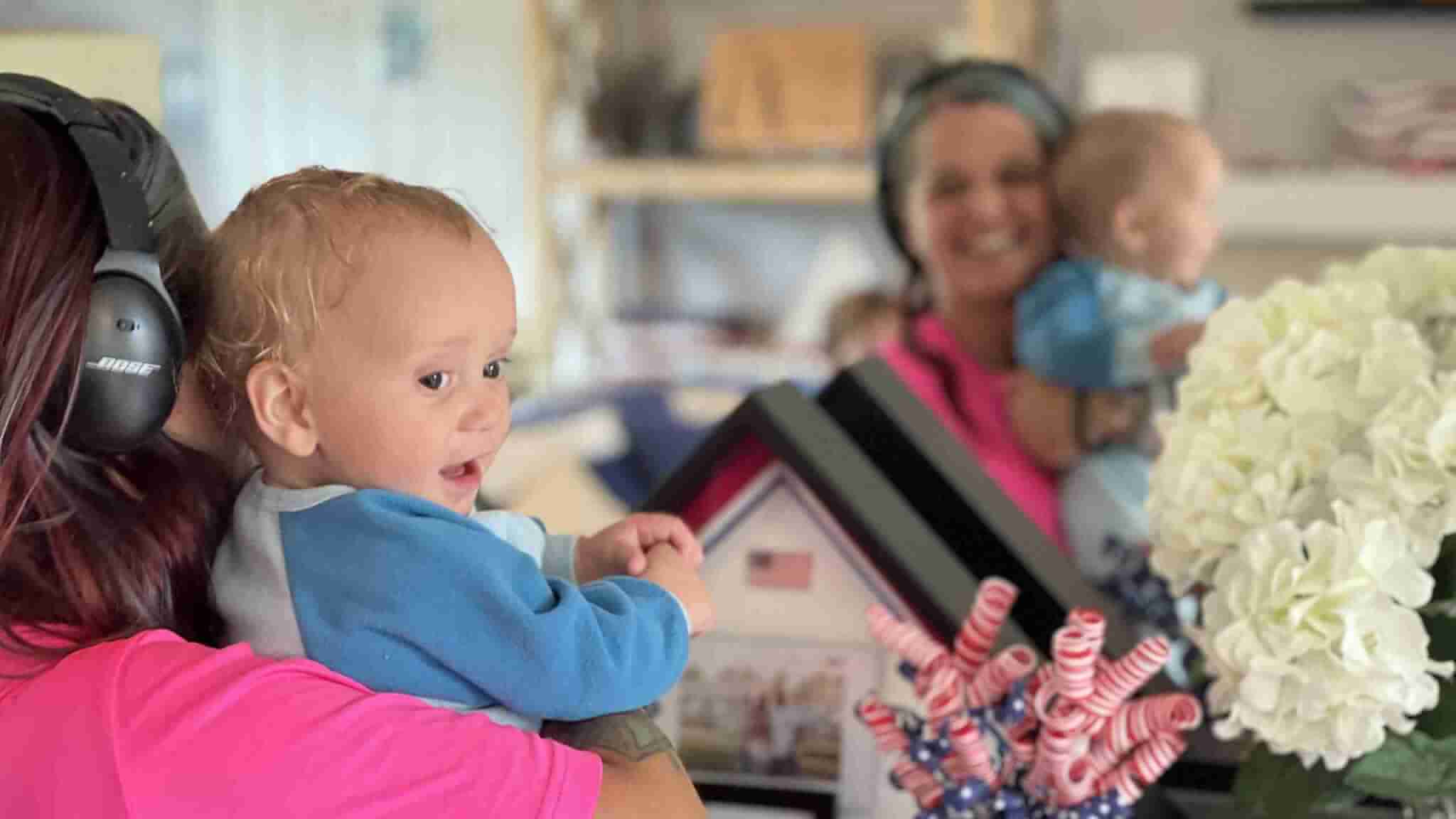
Erik, through a chance meeting in the airport with U.S. Army SSG (Ret.) Travis Mills, learned about the Travis Mills Foundation Veterans Retreat and visited with his family in summer 2024. Erik, Za-neta, and their children couldn’t have had a better experience with fellow recalibrated families, adapted activities.
After Amputation
Erik served in the U.S. Army from 2009 to 2019. While he had hoped to serve a full two decades, he was medically retired due to his injury, serving just shy of 12 years and leaving as a Training NCO Staff Sergeant.
He was always very athletic and served as a snowboard instructor for 14 years. He also played soccer, basketball, and volleyball, and was a state high jumper in school.
In talking about various prosthetics, a doctor at the VA told Erik that the goal was to help him be as active as he was pre-injury.
After that, it was “Game On,” said Erik.
His first attempt at adaptive sports was wakeboarding with a local veteran’s organization in Minnesota. Erik doubted his ability.
“I went from the best shape of my life to the worst shape of my life,” he said. “I never thought I’d be able to do it.”
However, all of that changed in one wakeboarding session.
“My buddy never gave up – he got me up on that surfboard,” Erik said. “My whole family was crying and screaming – after that, my whole mindset changed.”
Erik even recently had a prosthetic made with a hockey skate so he can share in the joy of the sport with his son.
Meeting SSG Travis Mills
Erik was traveling home from a Move United Race Camp in Breckenridge, Colorado, when he met SSG Travis Mills, Founder and President of the Travis Mills Foundation.
“My leg was hurting – the prosthetic wasn’t fitting right,” he said. “I just wanted to check my bags and get out of there.”
As Erik’s flight was delayed, he noticed Travis and struck up a conversation. Erik asked if Travis had been to the same camp, only to find out that while Travis had indeed visited the camp before, and he was actually in Denver at the moment for a motivational speaking engagement.
Travis and Erik had a beer in the airline lounge, and Travis invited him to learn more about the Travis Mills Foundation Veterans Retreat in Maine.
“He told me it was for my entire family,” Erik recalled.
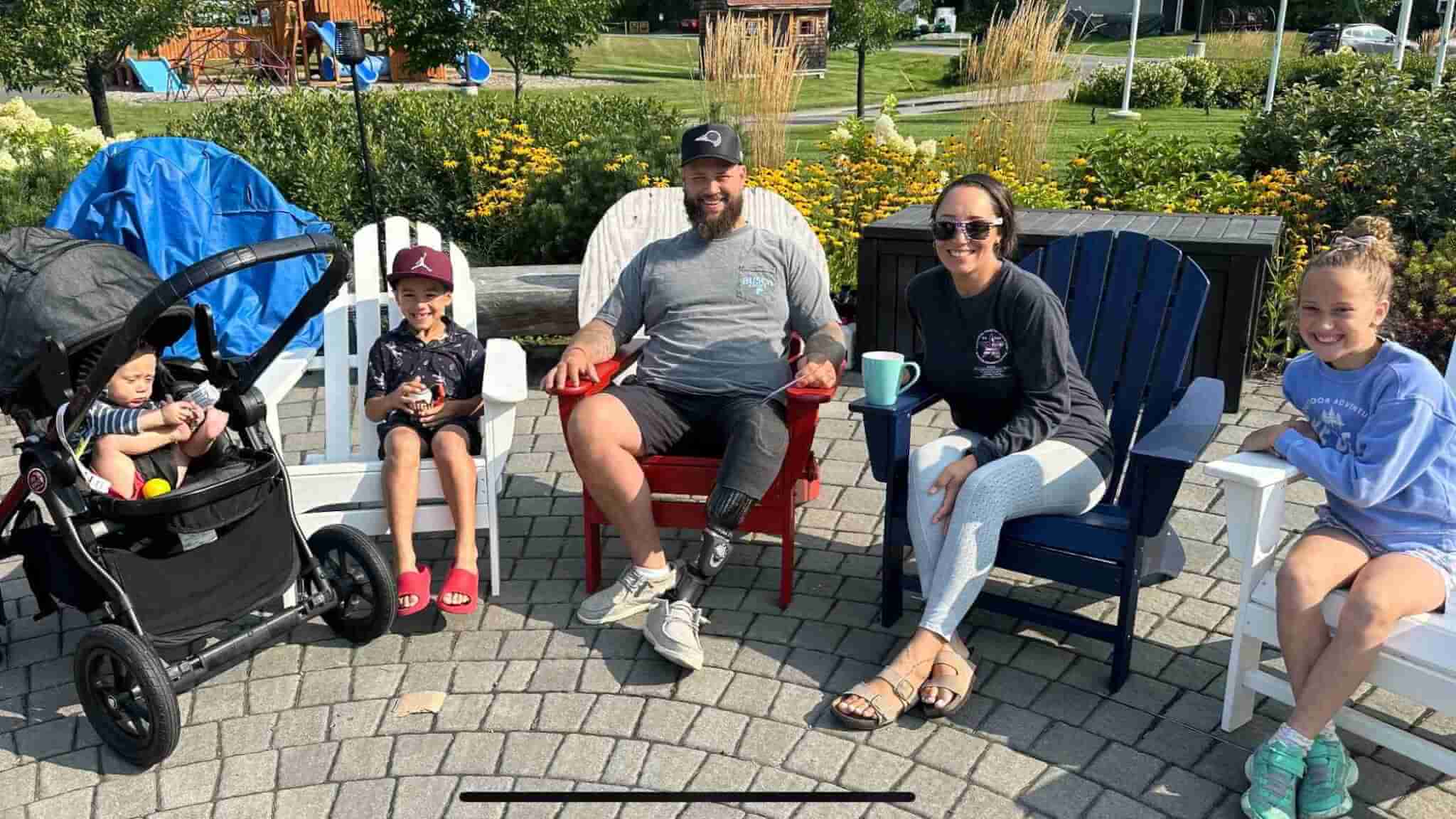
Erik, Za-neta, and their three children visited the Veterans Retreat in summer 2024, less than a year after meeting Travis, which Erik said came at exactly the right time.
“I had been away from my family for 10 weeks,” he said, adding that he’d been engaged in an intense program at the Adaptive Training Foundation in an effort to improve how he moved with his prosthetic.
After Erik’s leg was amputated in 2019, the COVID-19 pandemic was reaching the United States, so he didn’t have regular physical therapy, or even a normal process with the fitment of the prosthetic limb to replace the leg he lost.
“I’ve learned everything on my own,” he added, noting Za-neta’s tireless efforts.
“For the first two weeks after surgery, I was up every two hours giving him medication,” Za-neta said. “It was like having a newborn, essentially – and our youngest was 3 at the time.”
With so many uncertainties surrounding the pandemic, Erik and Za-neta’s family couldn’t provide support in ways they generally would have because of distancing.
“I think it was my first day back to work when he fell down the stairs,” she said, adding that ultimately she quit her job as a teacher to care for her husband. Additionally, Erik was opening a new business near his home in Wyoming, Minnesota.
Spending 10 weeks with the Adaptive Training Foundation proved beneficial.
“Before going there, I could balance on my prosthetic for maybe, 2 or 3 seconds. By the end, I did it for over a minute.”
Za-neta also observed a difference, not only physically, but mentally.
Erik has consistently relied on athletics and exercise as a key strategy for managing his mental health. Since his injury, there have been times when Erik felt embarrassed to work out in a wheelchair. However, his experience at the Adaptive Training Foundation humbled him.
“Some of my classmates were paralyzed,” he said. “They’ll never walk, but for me, I could be working out in a wheelchair for a couple weeks while my leg heals, and be walking again.”
In Erik’s recovery journey, he found a passion for sitting volleyball, a Paralympic sport that’s a variation of volleyball, but played while seated.
In fact, Erik is pursuing a spot on the 2028 Paralympic team.
“I just want to show my kids a good example of there not being any limitations,” Erik said. “Even with adaptations.”
Family Life
Each of Erik and Za-Neta’s children handled Erik’s amputation differently, a process he described as a “rollercoaster.” Vivian, who is 9, was very emotional, but a wonderful caregiver to her dad. Ragnar, 7, struggled with the change.
“I don’t know, he looked at me kind of like I was broken,” Erik said. “Like, dad’s not going to be able to do ‘dad things.’ He was only 3, so he was very confused. That came out as a lot of anger and pain – we’re still working on that today.”
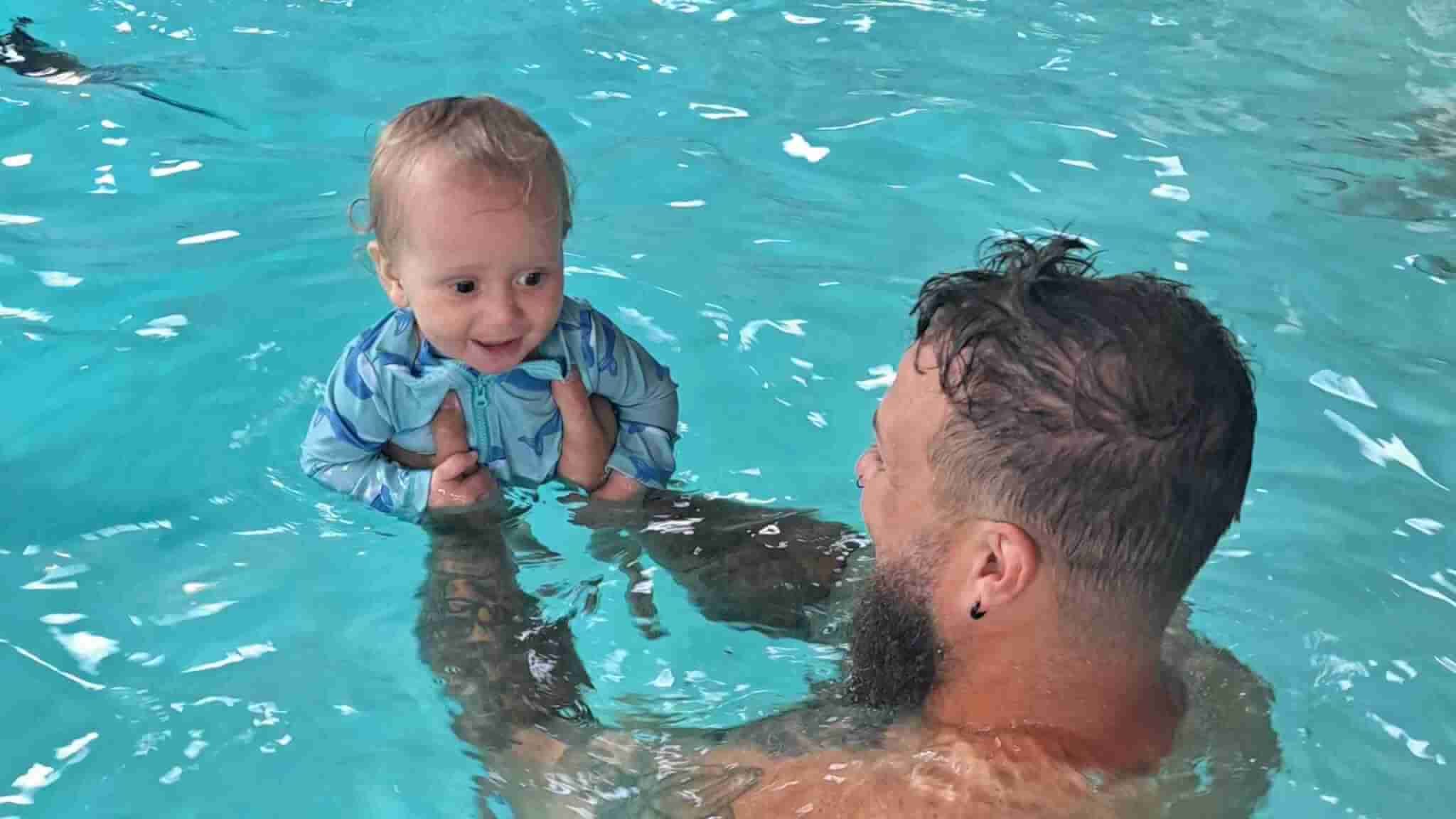
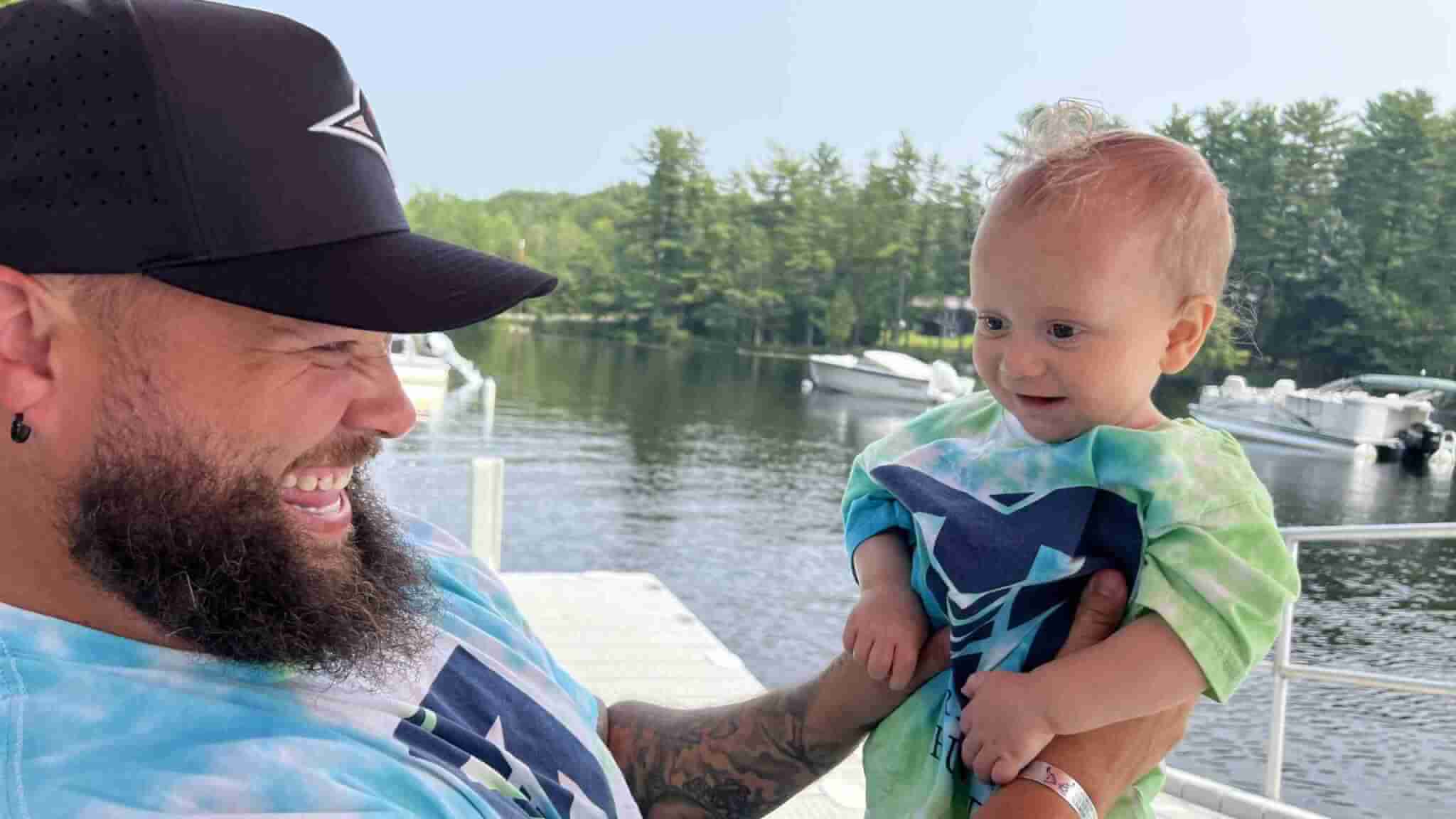
Odin, who’s 9 months old, of course, doesn’t think anything of his dad’s disability.
“It’s just normal to him,” Erik said. “He doesn’t hesitate to sit on the floor and play with my prosthetic – and even other people’s. It’s his way of life.”
That’s just one of the many aspects of the Travis Mills Foundation Veterans Retreat that the Mossberg’s appreciated – being around other recalibrated families.
Erik also appreciated the comfort he found at TMF when it came to being in his wheelchair vs. using his prosthetic.
“When I’m in my wheelchair, and people are like, why aren’t you walking? I feel like I have to explain myself. Here, it’s not even a thing,” he said.
The family enjoyed wheelchair basketball where not only the recalibrated veteran plays in a wheelchair, but so do their family members and everyone on the court.
“I want to say ‘thank you’ to the Travis Mills Foundation for having us out here,” he added. “It feels good to be part of this, inclusion for all is important.”