
When Jonathon Kohl joined the Army in 2010 at the age of 22, he was following in the footsteps of his father, Paul, a dedicated Army veteran who served 23 years. Paul’s official retirement came just one day before the September 11, 2001, terror attacks on the United States.
Paul’s reaction to the attacks was intense: “I was irate,” he recalls. As his unit deployed to Iraq, Paul felt a deep sense of longing, wishing he could be there to serve alongside them.
Jonathon, a ROTC graduate from Rensselaer Polytechnic Institute, began his military career with high hopes. His service was promising until March 2013, when his deployment took a tragic turn. Just three months into his first tour in Afghanistan, the helicopter Jonathon co-piloted crashed during a test-fire exercise in Kandahar. The pilot, Chief Warrant Officer 3 James Grove, died in the crash, while Jonathon sustained severe and permanent injuries: traumatic brain injury, multiple spinal fractures, hip, ankle, and rib fractures, a broken jaw, and more.
The helicopter had completed a simulated engagement and was preparing for another when a low-RPM warning sounded, followed by the crash just nine seconds later. Jonathon reflects, “My pilot saved me,” though he has no memory of the incident other than what he’s been told. Fortunately, he doesn’t struggle with post-traumatic stress due to this lack of memory.
The crash changed Jonathon’s life irreversibly. Off-duty National Guard pilots quickly sprang into action, rescuing Jonathon from the wreckage.
“They landed immediately next to the crash site, found Mr. Groves, and then Jonathon, who was moaning. They dragged him toward a Blackhawk that had just landed at Kandahar,” Paul explains.
Jonathon was on the operating table approximately 15 minutes after the crash, a critical factor in his survival. The cause was later identified as a faulty part.
For Paul and his wife, Micha, understanding their son’s condition was challenging until they reunited with him at Landstuhl Medical Center in Germany.
“The military flew Jon from Afghanistan to Germany at 10,000 feet in a C-17 because the respirator wouldn’t work above that altitude,” Paul recalls.
Jonathon spent about a week in Germany before being transported to Joint Base Andrews in Maryland, then to the surgical intensive care unit at Walter Reed National Military Medical Center, and finally to McGuire VA Hospital in Virginia, where he began his lengthy recovery.
In the early stages, Jonathon had to relearn nearly everything, from basic physical movements to cognitive skills. The family celebrated when he graduated from a feeding tube to eating solid foods.
“He immediately asked for Korean food,” Paul smiles, noting the connection to his own story. Paul and Micha had met and married during a deployment to South Korea, where their wedding was attended by Micha’s family and a few of Paul’s fellow soldiers.
In 2016, Jonathon and his wife, a Navy pilot, moved into a townhouse in Washington, D.C., and he continued engaging in recreational, occupational, and therapeutic activities. Despite predictions that he might never walk again, Jonathon used a walker to get around by this time. However, the marriage did not last, leading to a divorce. By 2019, Paul and Micha had taken over Jonathon’s care, splitting their time between Maryland and Pennsylvania.
Today, Jonathon walks independently with a cane. The COVID-19 pandemic introduced virtual appointments, which proved crucial for Jonathon’s continued care.
“All of a sudden, we were in closer contact with his doctors,” Paul shared.
Veteran nonprofits also offered virtual peer support groups, which greatly benefited Jonathon. His social life flourished during the pandemic, thanks to various nonprofit initiatives, allowing him to participate in music therapy and work with a personal trainer. What began as virtual support evolved into a robust network that continues to enrich his life.
Jonathon and his parents meet with his care team every four months, setting and achieving new goals. One milestone that Jonathon values is the removal of his suprapubic catheter.
“That was a huge quality of life improvement,” Paul notes.
Jonathon’s next goal is to run unassisted. While he currently trains with a personal trainer and a resistance belt, he remains hopeful for the future.
Paul and Micha recognize Jonathon’s progress but also acknowledge the challenges they face. Their efforts to support Jonathon can delay their own plans, as evidenced by a recent remodel in their home that remains unfinished.
“We spend a lot of time in Maryland with Jon,” Paul says, noting that he and Micha often alternate trips south.
“When we come home, we’re decompressing and catching up on sleep.”
Currently, Jonathon cannot be alone due to several factors, including a risk of falling. However, Paul remains hopeful that, with time, Jonathon may gain more independence.
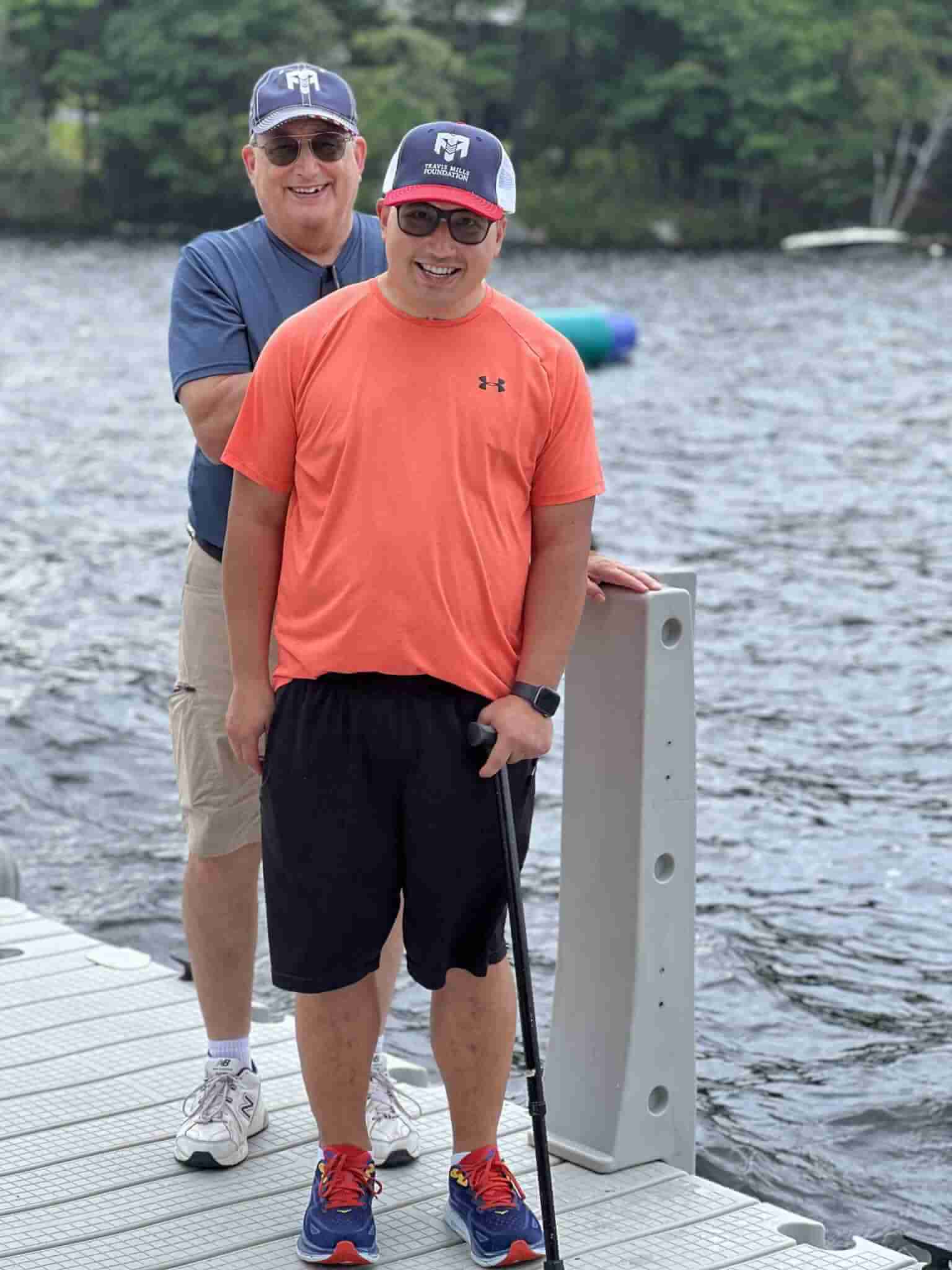
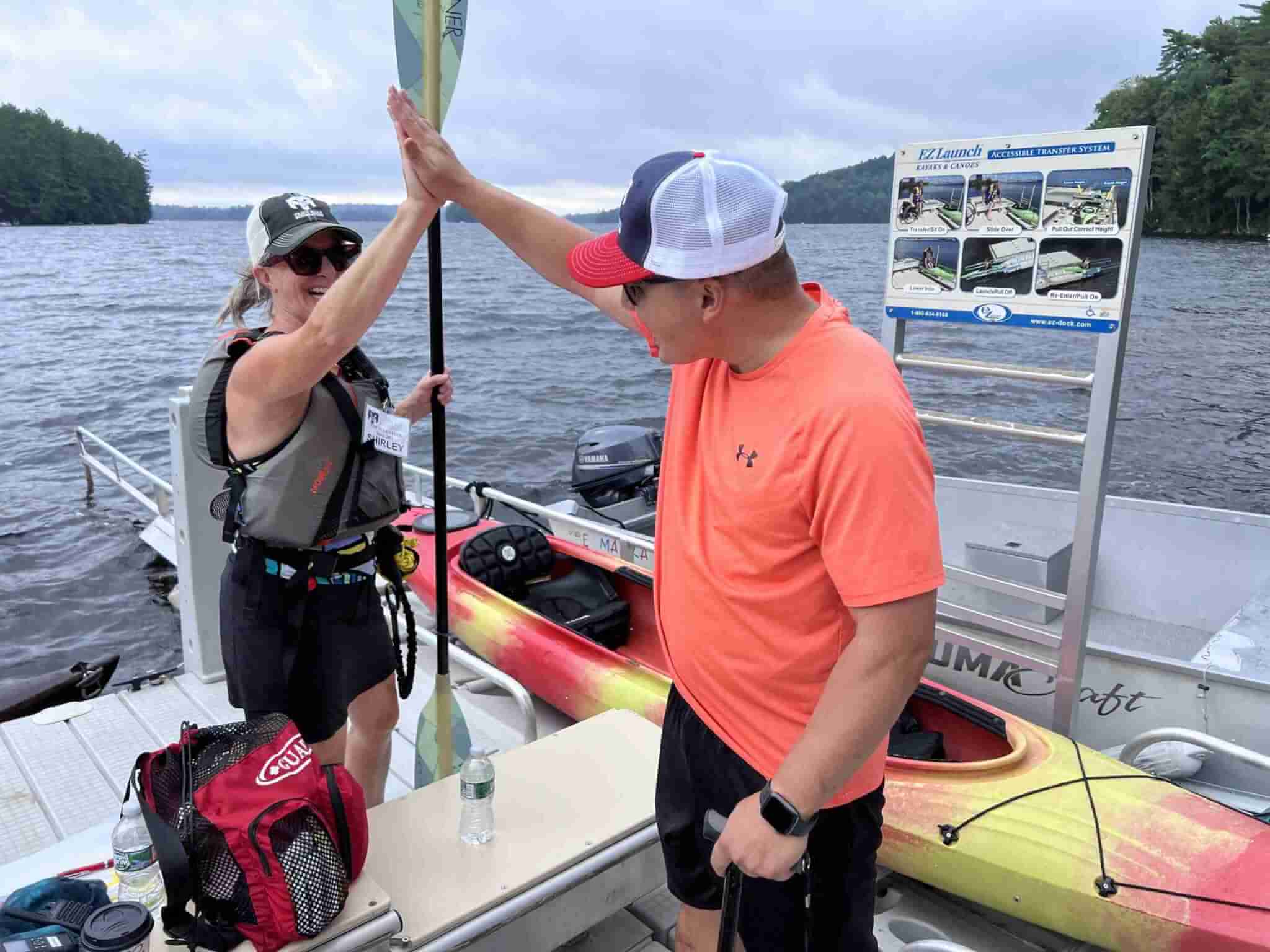
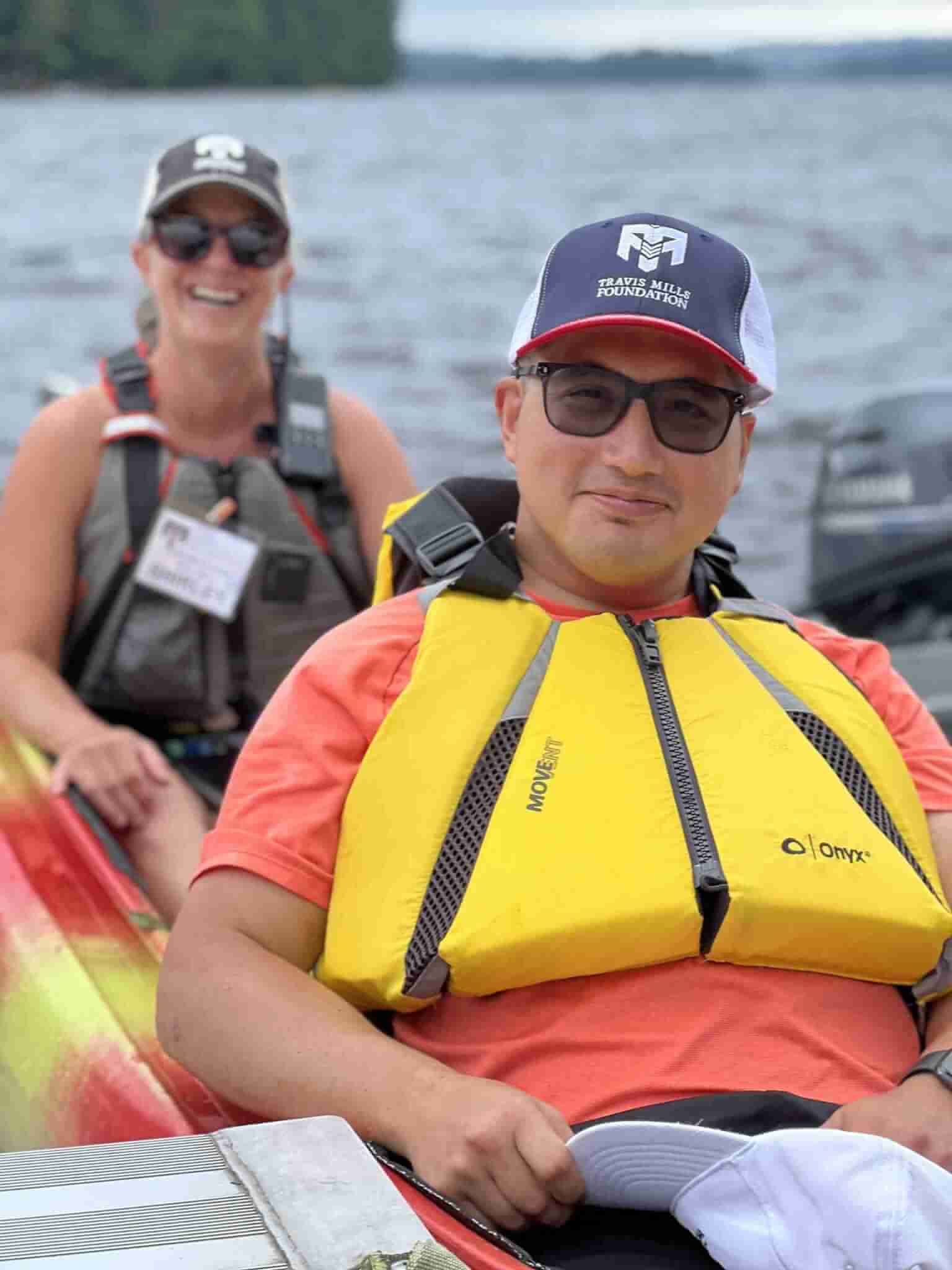
In the summer of 2024, Paul and Jonathon visited the Travis Mills Foundation Veterans Retreat, accompanied by Jonathon’s service dog, Hutton. This visit marked their second experience at the Retreat, which was markedly different from their first in 2021. Jonathon’s cognitive abilities had significantly improved, allowing him to engage in more activities.
“This time, we basically did everything,” Paul says, admitting that he was more tired than before.
Jonathon, ever the extrovert, stayed up for evening activities, while Paul, an introvert, retreated early.
“The other veteran families helped him get back to his room,” Paul adds, noting that Hutton’s presence also provided Jonathon with a sense of independence, and in the long term, a sense of responsibility.
Jonathon’s journey is a testament to resilience, support, and the ongoing quest for new milestones.