Ohio resident Jon Hoffman’s career in law enforcement spanned 30 years and among the cases he investigated as a detective were drug overdoses, stabbings, shootings, sexual assaults, and more.
“Anything felony,” he said, adding that he was mentored early on in his career on how to handle crimes against children.
Jon, 55 years old, also spent many years investigating nothing but juvenile crimes, including physical abuse, neglect, sexual assault and cases from ICAC – the Internet Crimes Against Children Task Force Program.
“Basically, child pornography,” he said, adding, “I struggled my whole career.”
Everything came to a head for Jon during the last three years of his career when his cases intensified. He conducted many hours of forensic interviews with children who had been victims of crimes that ranged in ages from 3 to 12 years old. On average, he conducted 25 to 35 of these interviews per year, with a 97 to 98 percent success rate in obtaining a disclosure from a child.
Jon estimates that he’s reviewed well over a billion pieces of evidence from these cases.
“One case alone included 5 terabytes of evidence,” he said. “I lost count when I hit a billion.”
On any given day, Jon would investigate up to 35 cases, either involving sexual assault or ICAC.
“Multiple cases would be running around in my head,” he said, adding that while reviewing material, Jon’s process included articulating his observations aloud and recording them for documentation.
“Children would tell me what happened in a couple different ways,” Jon added. “Either verbally, they’d draw a picture, or demonstrate the action.”
Investigations also included identifying other potential victims, people in the child’s life and ultimately, a suspect(s).
“By the tail end of my career, I was spent,” he said.
Jon’s body started to give out so much that he couldn’t complete basic physical training required for his job.
“I had abused my body for so long and I was coming to grips with the fact that there were certain things I could not do,” he said
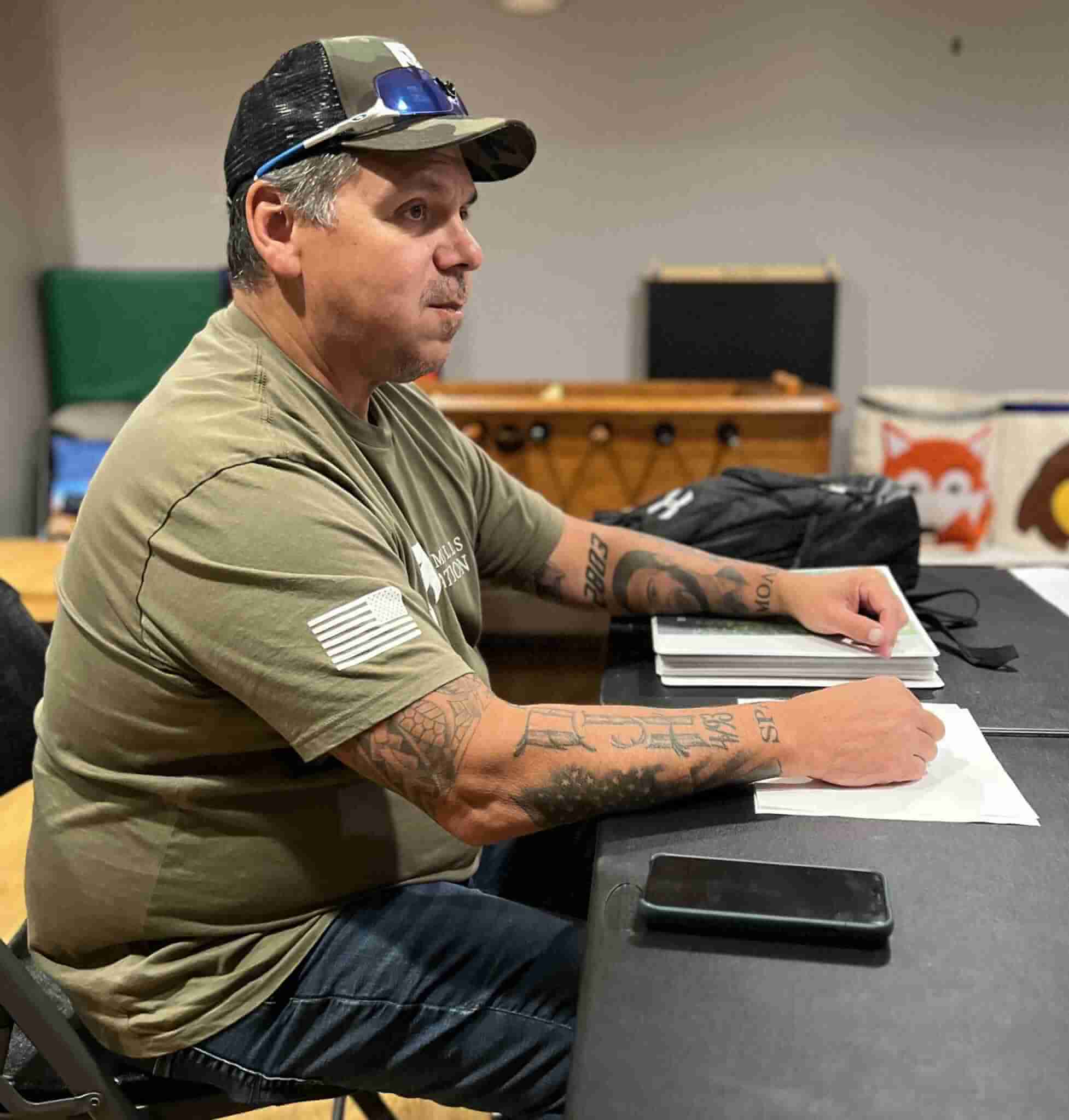
As Jon’s struggles with mental health worsened, so did his alcohol use, along with his temper. However, through Warrior PATHH training at the Travis Mills Foundation, he’s been able to maintain a healthier mindset, rebuild his sense of purpose, and cultivate the tools needed to navigate life with resilience and gratitude.
PATHH – Progressive & Alternative Training for Helping Heroes – is the nation’s first program based on the science of Post-Traumatic Growth, a positive psychological transformation that can happen after trauma. Offered at only 10 locations throughout the country, Warrior PATHH, a program of the Boulder Crest Foundation (BCF), is funded by the Avalon Action Alliance (AAA).
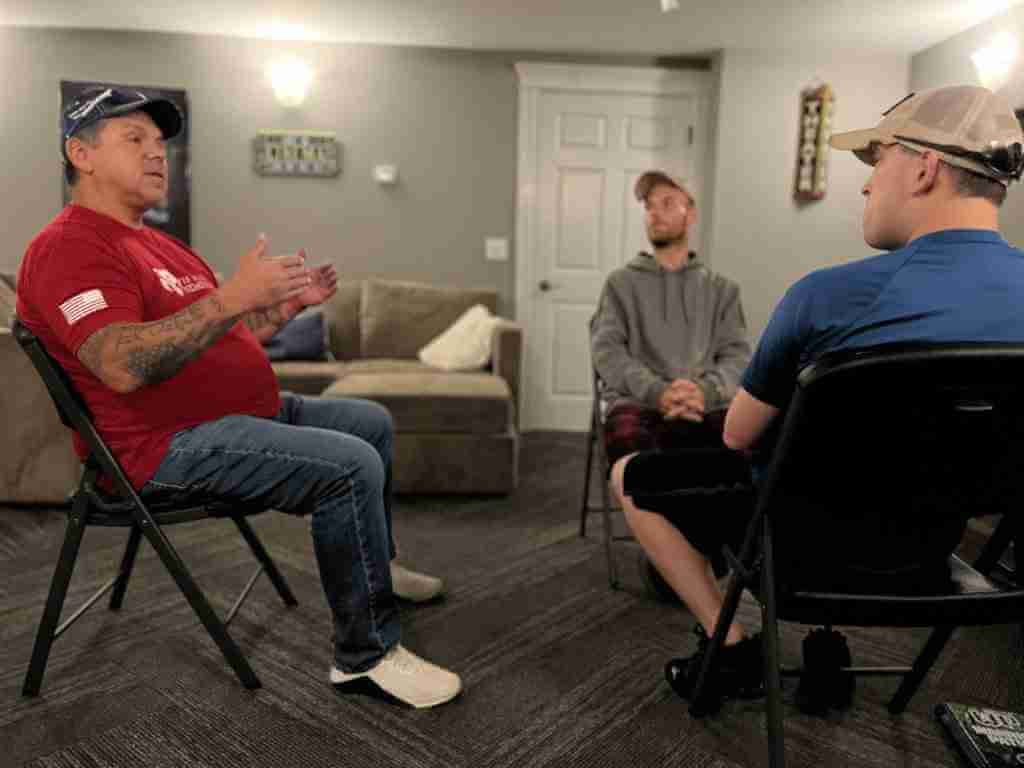
Jon, now retired from law enforcement and a PATHH Guide at the Travis Mills Foundation, helps fellow first responders and veterans on their paths to transform struggle into strength and thrive in the aftermath of trauma.
Shift Happens
Jon said a shift in his thinking didn’t happen until day four of the seven-day, in-person initiation at the Travis Mills Foundation Veterans Retreat in Rome, ME, in March 2024.
He admitted to feeling highly guarded upon arriving at the Retreat, for many reasons. One being, the unique nature of Jon’s role as an ICAC specialist.
“There’s not that many of us,” he said.
Jon quickly identified a PATHH Guide who also had retired from the field of law enforcement and investigated ICAC cases, which made him more comfortable.
Despite this, Jon thought of his “contingency plan.”
“I was going to commit suicide if (Warrior PATHH) didn’t work,” he said. “This was heavy on my mind all the way up to the beginning of day four.”
On or about days 2 or 3, Jon started to put aside his anger and lean into the practices that were being taught.
“I wasn’t giving it a fair shake,” he admitted.
Thankfully, Jon said, a shift happened.
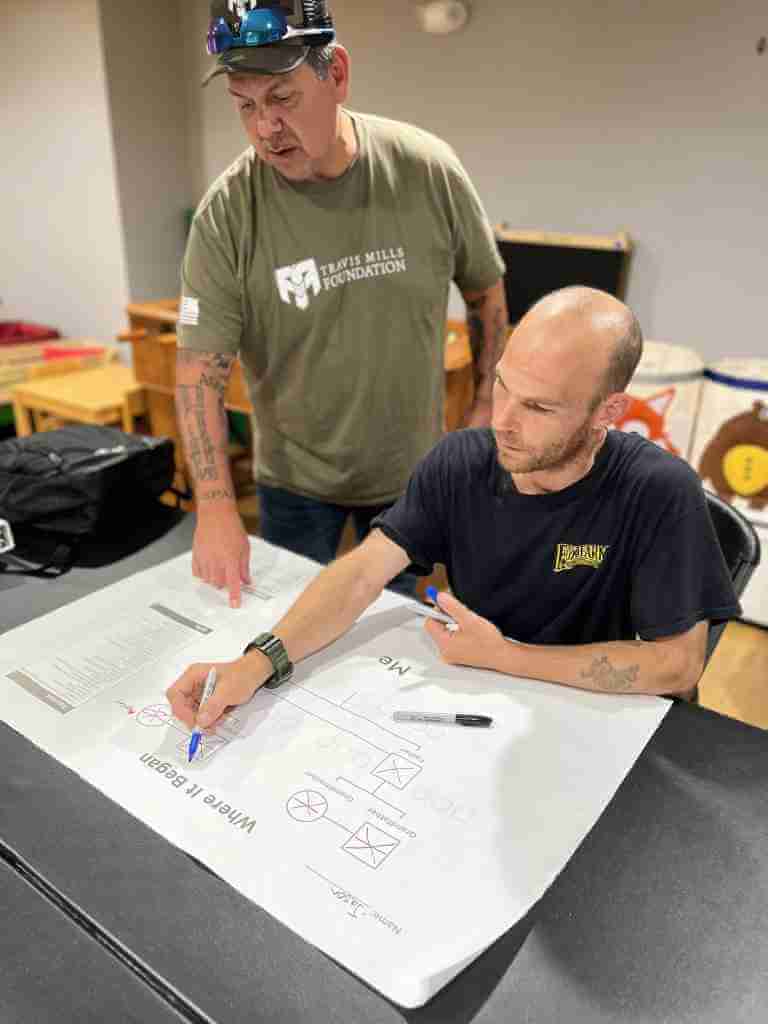
“Shift Happens” is a term used in Warrior PATHH to describe the change in a person’s perspective regarding previous trauma so they can take lessons from it and cultivate wisdom from these experiences.
“When we are in the midst of deep struggle it’s very difficult to make sense of the experiences or see any value in them,” said Ray Edgar, Guide and Training & Curriculum Development Manager.
“When we experience Post-Traumatic Growth, a shift happens that can help us to change our perspective on trauma,” said Ray. “A shift can happen in how we see ourselves, others and the world.”
Jon eventually recognized how deeply he had been struggling when he arrived at PATHH.
“I had 30-plus years of service, so when I retired, I lost my identity and purpose,” Jon said, adding that during the last three years of his career, thoughts of taking his own life had become increasingly frequent.
Family Life
Jon tried to downplay the impact his work was having on him when it came to his wife and children.
“I didn’t realize the damage and toll that it took on my family,” he said.
Jon kept his work life highly private, avoiding discussions about cases at home. To maintain some connection while protecting his family from the details, he and his wife of 33 years developed a system of using nicknames for cases—a simple strategy Jon used to prevent himself from completely shutting down and isolating.
One ICAC case, however, consumed Jon.
“I’d come home from work, drink, stay up late, and not sleep much,” he said. “I basically ignored my wife. She said we lived two different lives, and this went on for a year.”
Since attending PATHH training, Jon has had many difficult, but necessary conversations with his family. He refers to a quote by Joseph Campbell he learned in PATHH training when he thinks about the work he’s done: “The cave you fear to enter, holds the treasure you seek.”
“When you do the work and put in the time, you get the answers and the peace that you deserve,” he said.
Jon continues to work on, and struggle with, his mental health.
The science of Post-Traumatic Growth recognizes that struggle is inevitable – it’s how the struggle is handled that is vital.
“PTG and the work that goes with it, is a lifelong journey,” said Ray, noting a mantra that is used in training to “Struggle Well.”
Following Jon’s PATHH experience, he undertook a meditation focused on processing his own childhood trauma. Despite the cautionary advice against doing it alone, Jon chose to face it by himself.
“It took me back to a very bad memory I had as a child,” he said. “I wasn’t right when I came out.”
Jon described himself as “spun up,” and said his temper was getting worse in the days after the meditation.
Rather than turn to old habits, Jon called a fellow PATHH Guide.
“He helped me get through it,” Jon said, also emphasizing that, like Ray, training is a never-ending evolution.
“I have a different appreciation for life knowing that I didn’t kill myself,” he said, adding that as a law enforcement officer, close calls happened frequently.
“I’d just call it a day,” Jon said. “Whether it was a death notification, performing CPR on a child, or any number of bad things.”
Warrior PATHH, however, encourages a change inside, Jon said.
“You become more and genuinely empathetic and sympathetic to other human beings.”
Jon said being a PATHH Guide has allowed him to fill the void he used to feel by continually giving back and paying it forward.
He also continues to use practices he learned as a student.
“I do a lot of Stoics and reflective journaling,” he said. “I don’t think about tomorrow. I deal with the positive and the negative during the course of my day. It’s a new adjustment for me, but I’m enjoying the ride.”
“It’s been a very, very long time,” Jon said, pausing. “It’s probably been, nearly 35 years since I’ve felt this type of happiness.”