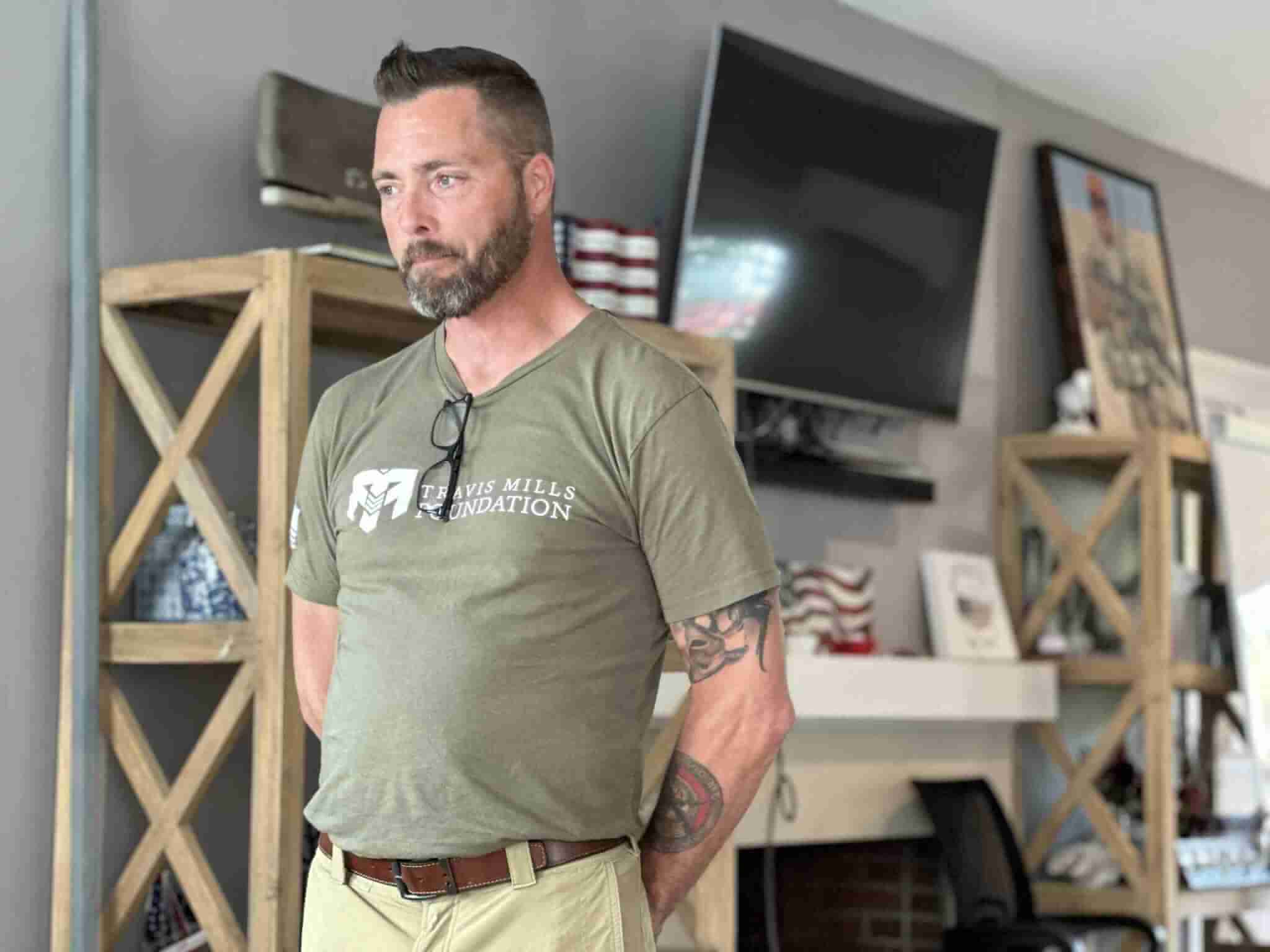
For 48-year-old Shane Shaltry, serving in the United States Air Force wasn’t just a choice—it was in his blood.
Shane’s father, two uncles, and four brothers all served in the Air Force. Shane served 14 years and during his career was a crew chief in refueling tankers and worked in nondestructive inspection, meaning he inspected aircraft system components and support equipment using nondestructive inspection methods.
However, Shane found his true calling in the Honor Guard.
“When I went into basic training, I fell in love with marching and drill,” he said.
The U.S. Air Force Honor Guard performs military ceremonies and honors, including funerals, to represent the Air Force at public events.
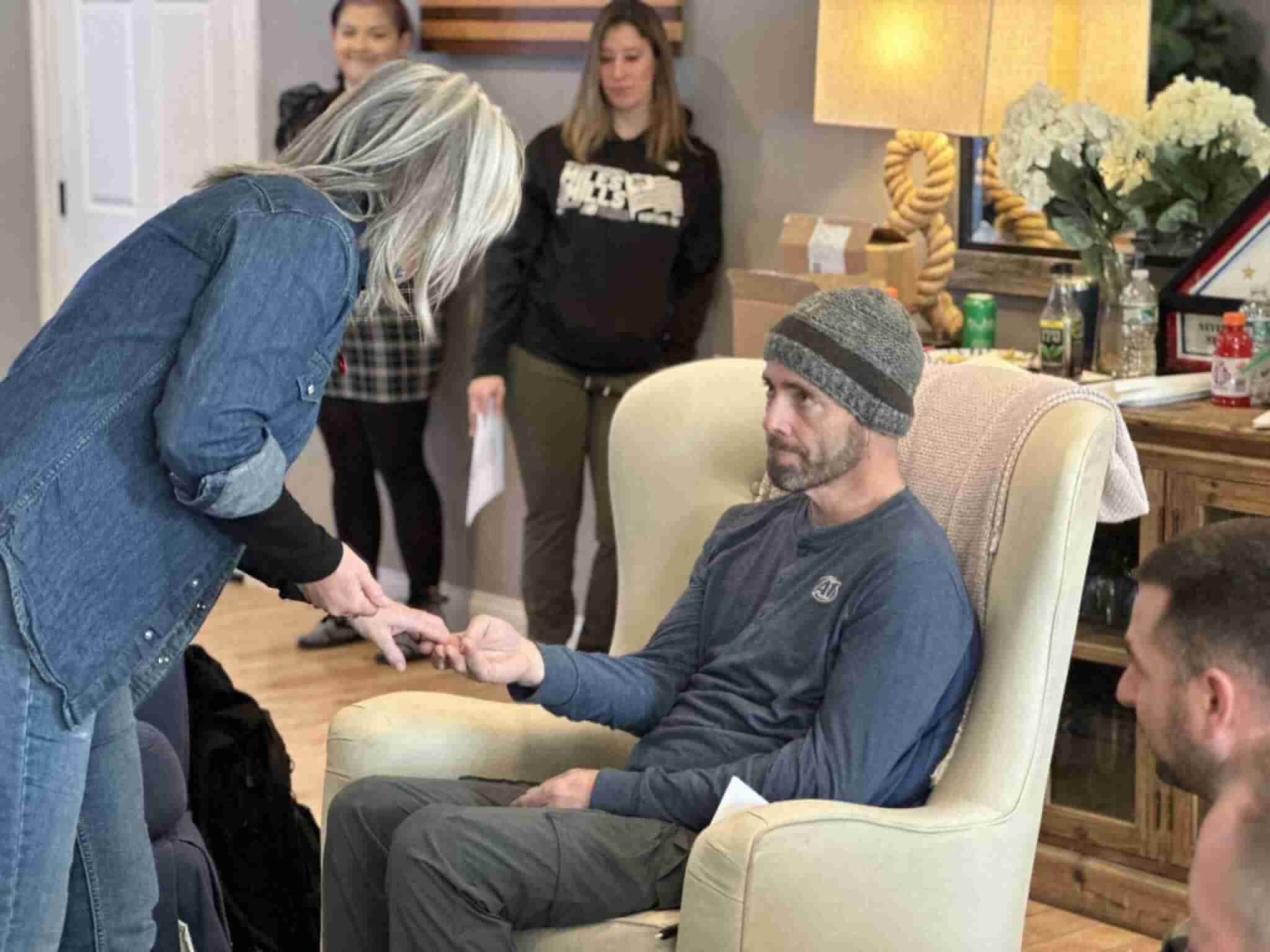
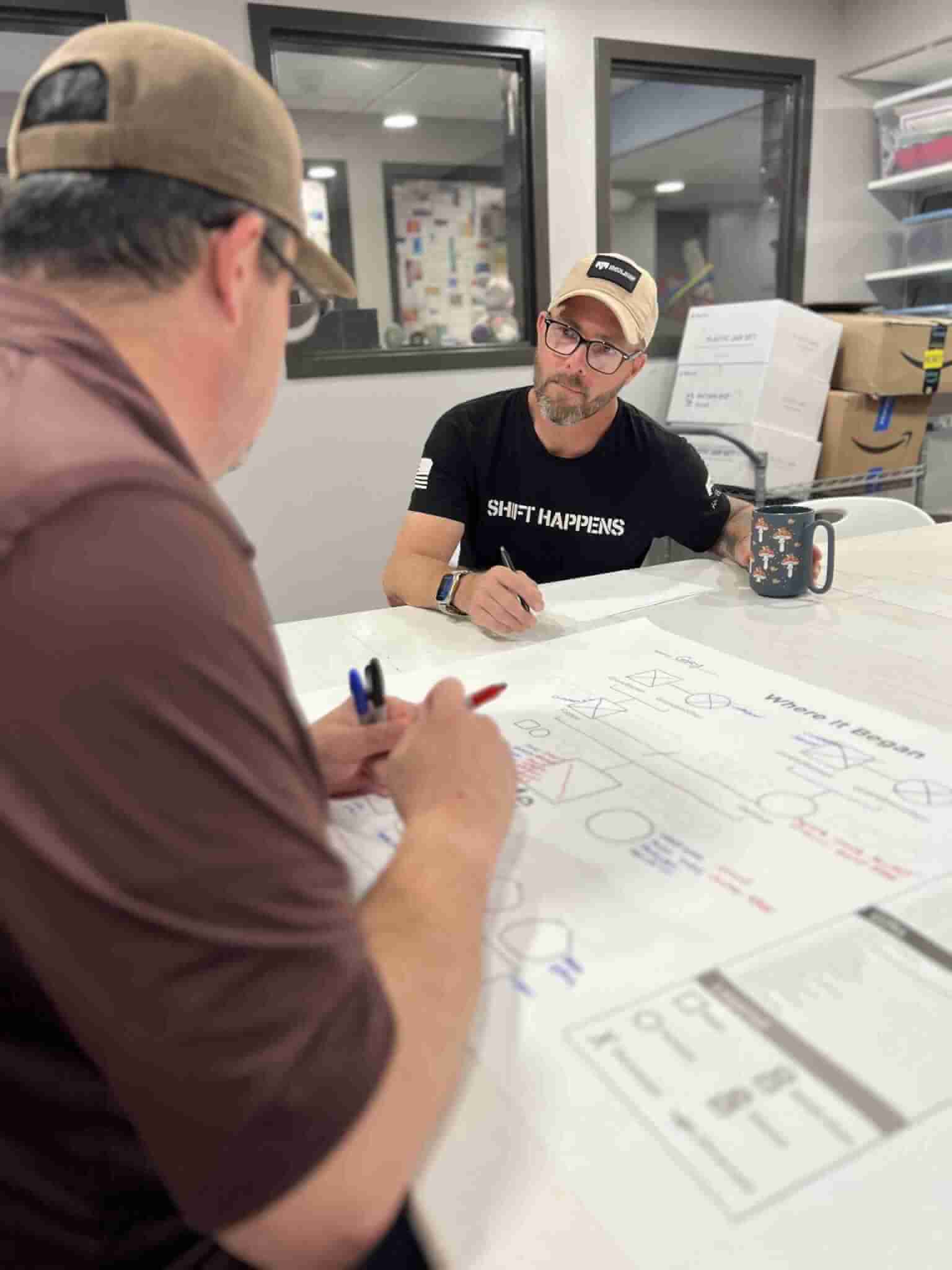
Shane accepts a pick during the song-writing portion of Warrior PATHH training at the Travis Mills Foundation Veterans Retreat. Now a PATHH Guide, the differences Shane has experienced have been life-changing.
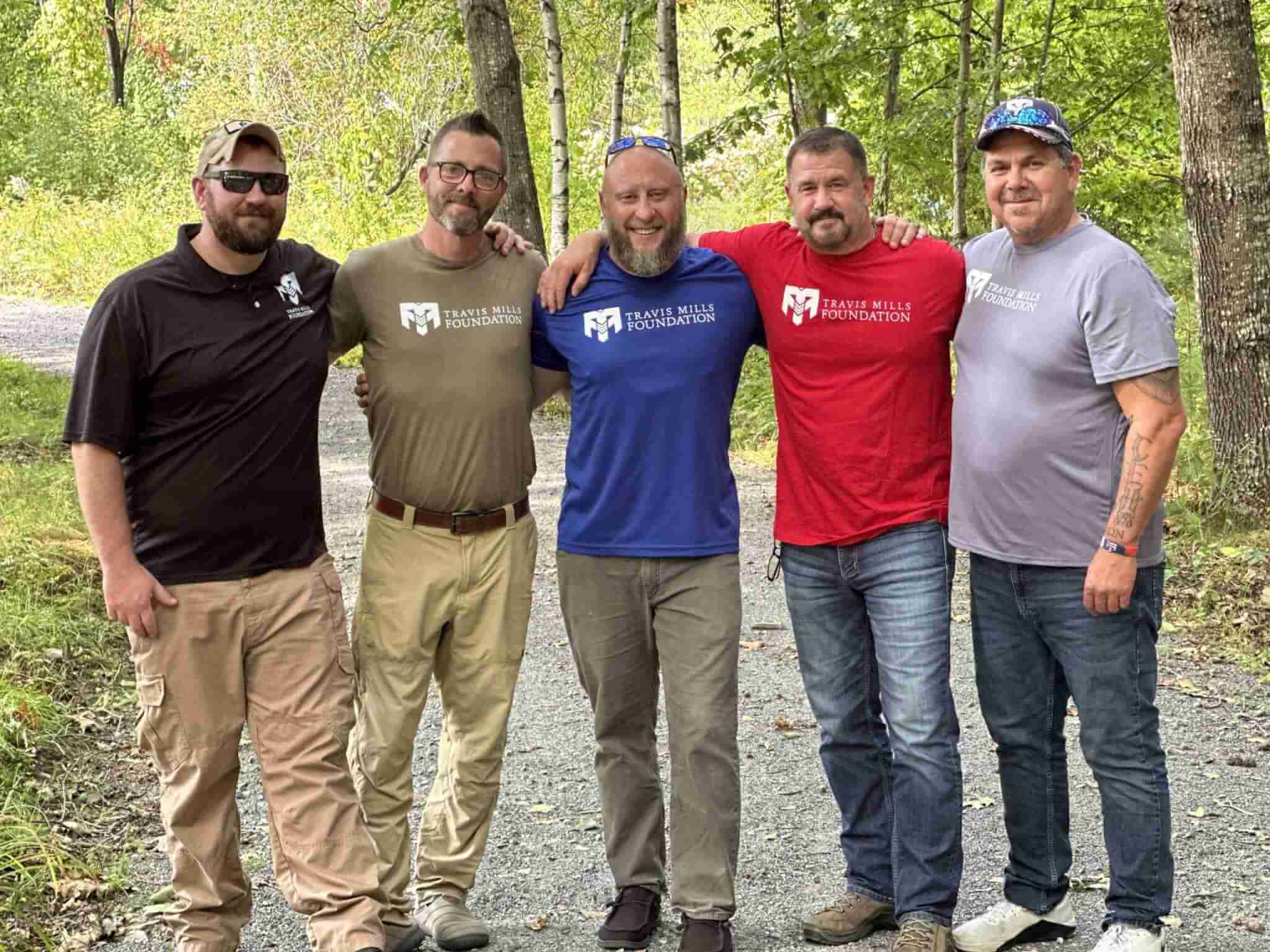
Warrior PATHH Guides at the Travis Mills Foundation include, from left, James, Shane, Adam, Tim and Jon.
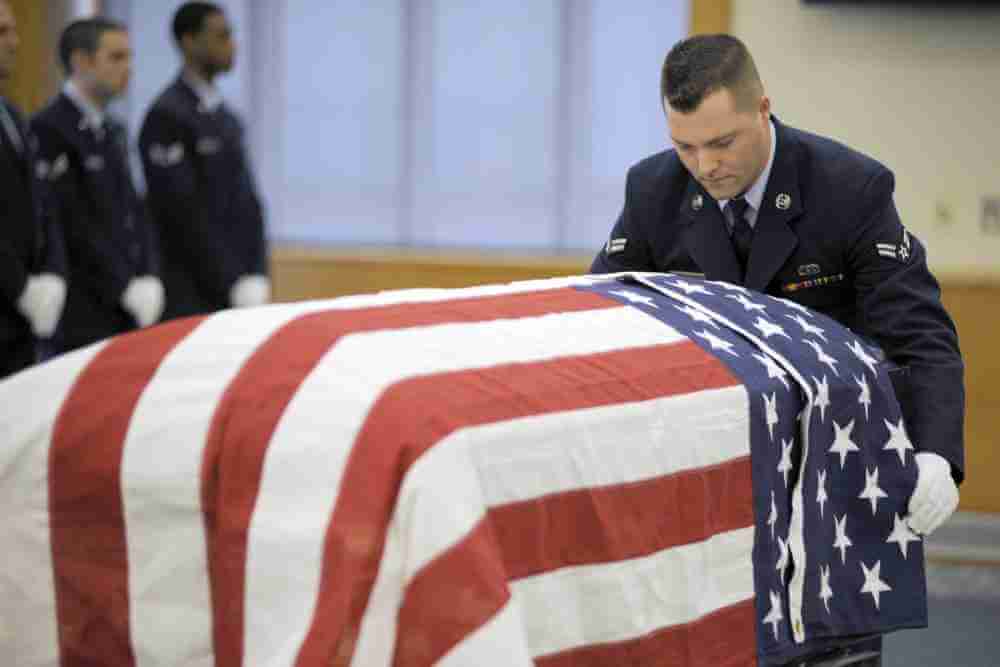
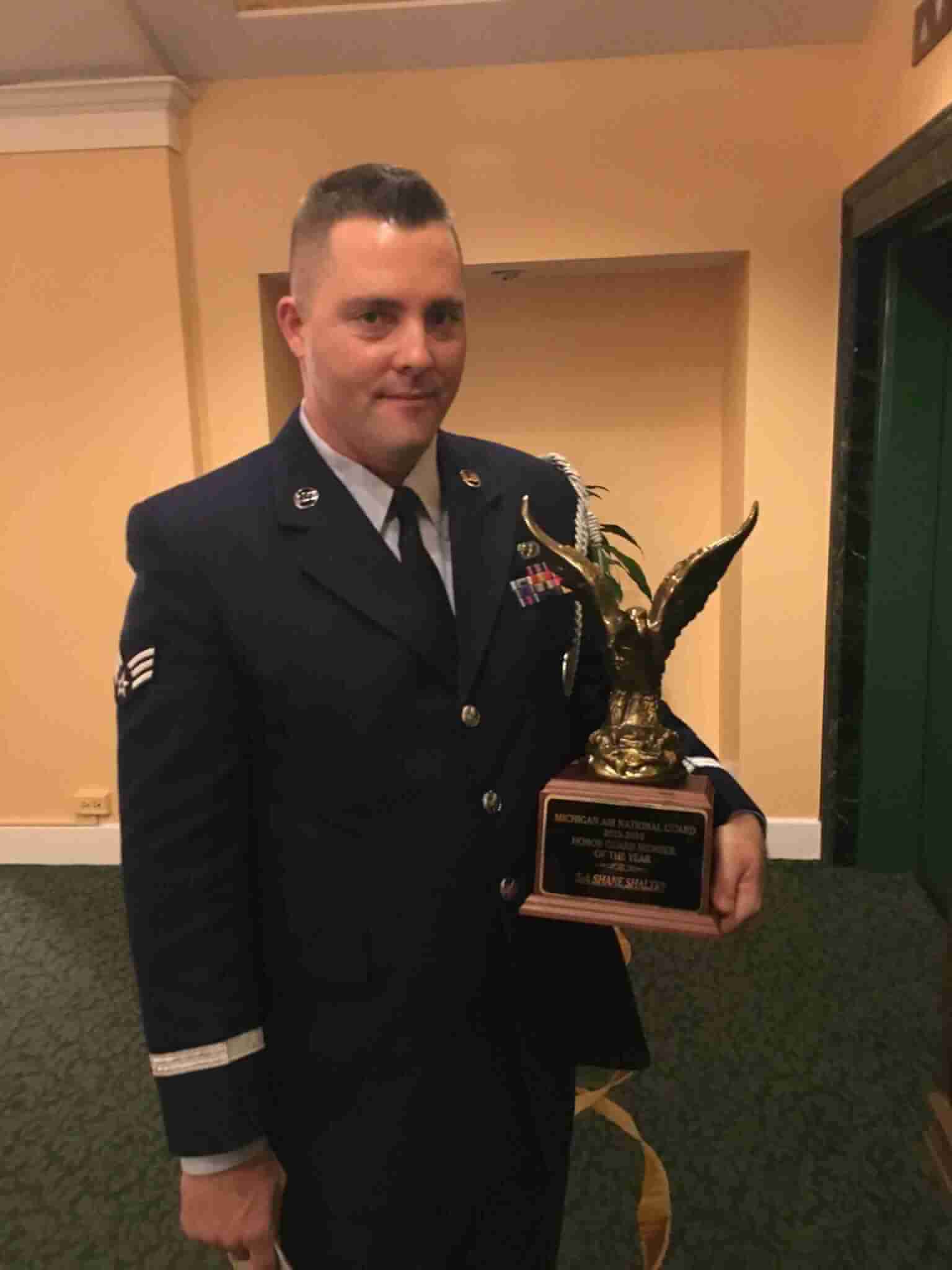
Air Force Veteran Shane Shaltry was a proud member of the Honor Guard during the 14 years he served in the military and estimates he served at more than 300 services.
“It was a job that I took really seriously,” Shane said.
An Air Force Honor Guard ceremony typically includes precise, synchronized movements by a team of uniformed personnel, often performing elements like presenting the colors (national and Air Force flags), a firing party firing three volleys, a flag-folding ceremony, the playing of “Taps” on a bugle, and the presentation of the folded flag to the next-of-kin, all done with a focus on military precision and respect, primarily during military funerals or official state events to honor deceased service members or dignitaries.
Shane enjoyed the mechanics and details of the ceremony.
“We didn’t wear name tags on our uniforms to show that it wasn’t about who we were—it was about honoring the servicemember,” he explained.
While Shane was good at staying composed during any given ceremony, oftentimes, as soon as he left, he fell apart.
“I was kind of a wreck,” he said.
Retirement
Shane was medically retired from the Air Force.
Shane hoped to continue serving in the Honor Guard after his Air Force career—a path open to honorably discharged veterans—but he struggled to find the right opportunity.
“I was losing my career, losing my people, my purpose, and coupled with that, cervical dystonia set in after an incident while serving in the Middle East,” he said.
After having chest pains for a few days, Shane went to a clinic in Qatar for treatment. His condition took a critical turn and he was declared clinically dead before being revived and medevaced to Landstuhl Medical Center.
“A month before that, my mom and brother had heart attacks three months apart. It runs rampant in our family,” he said.
Doctors in Germany later confirmed pneumonia as the cause of Shane’s illness. However, by the time he was transported back to the U.S. three days later, dystonia had set in.
He describes the condition as excruciating, and as what ultimately ended his military career. Additionally, the uncontrollable movements it caused were managed with opioids.
“Because I didn’t have a purpose, I was finding purpose in drugs and alcohol,” he said.
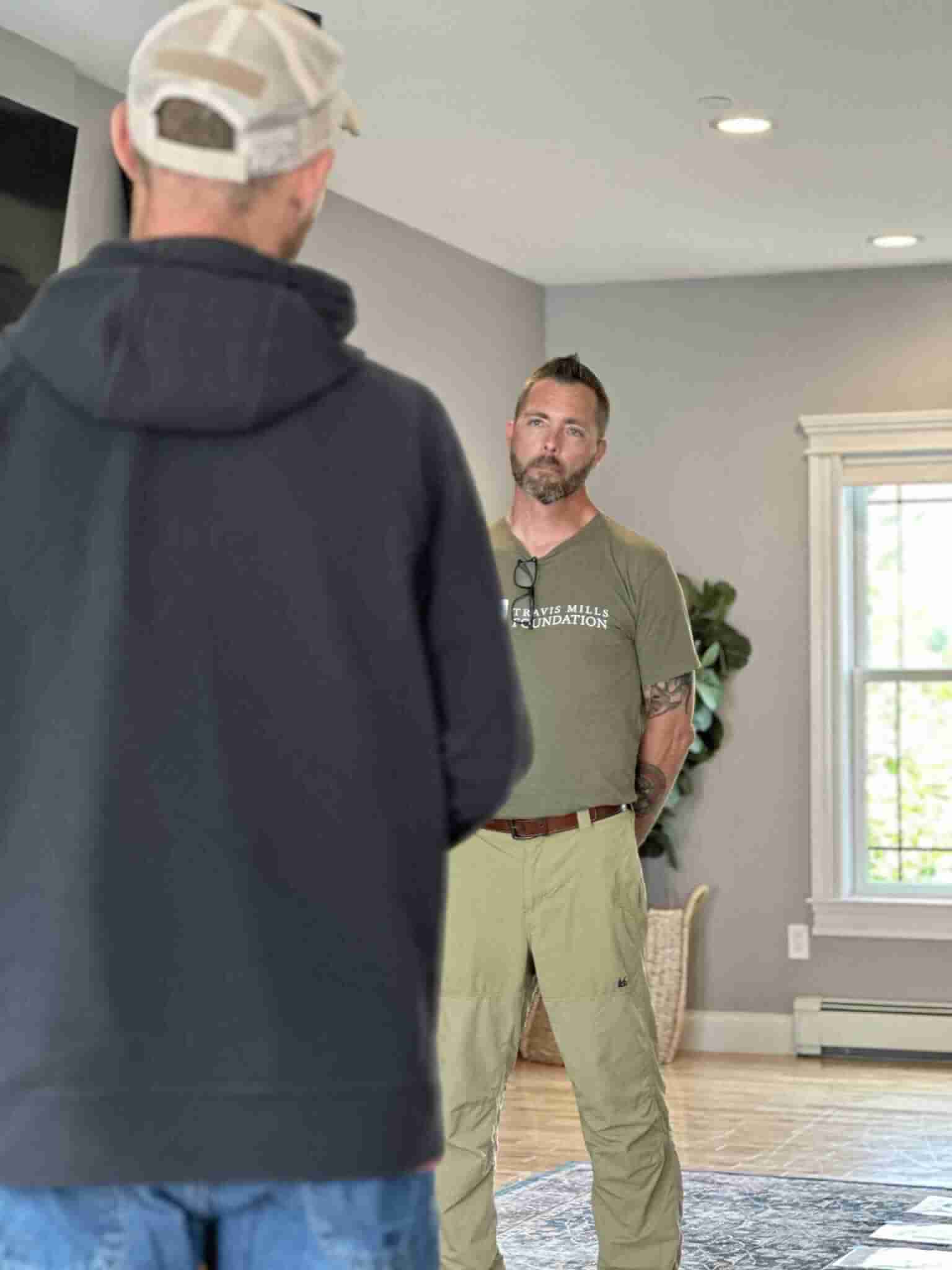
Shane and a PATHH student take part in the Life Walk, an exercise in the training program that is often filled with much emotion.
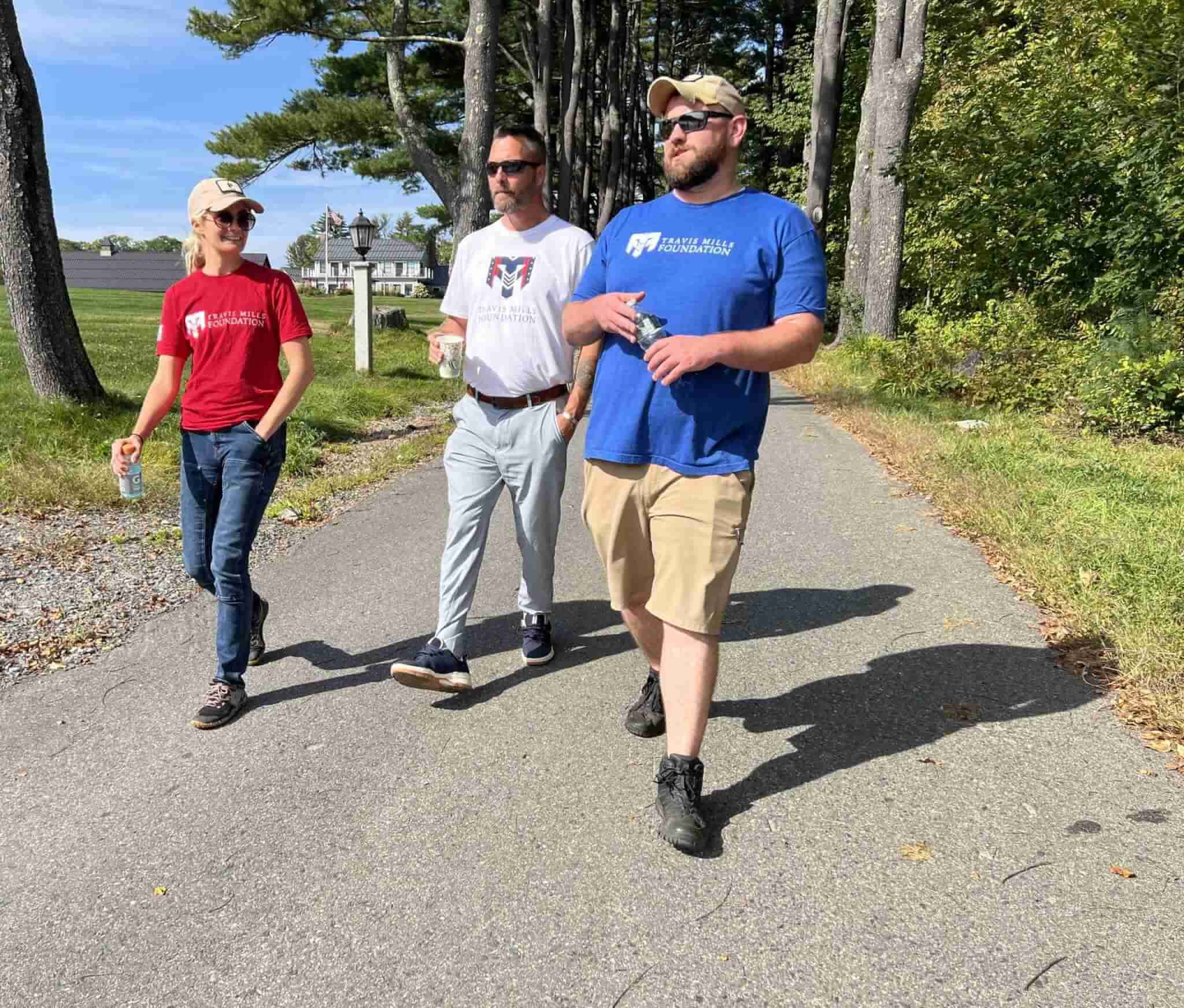
Shane finds much purpose in serving veterans and first responders in Warrior PATHH. An Air Force veteran, he also enjoys the camaraderie and connection he finds with fellow Guides and students.
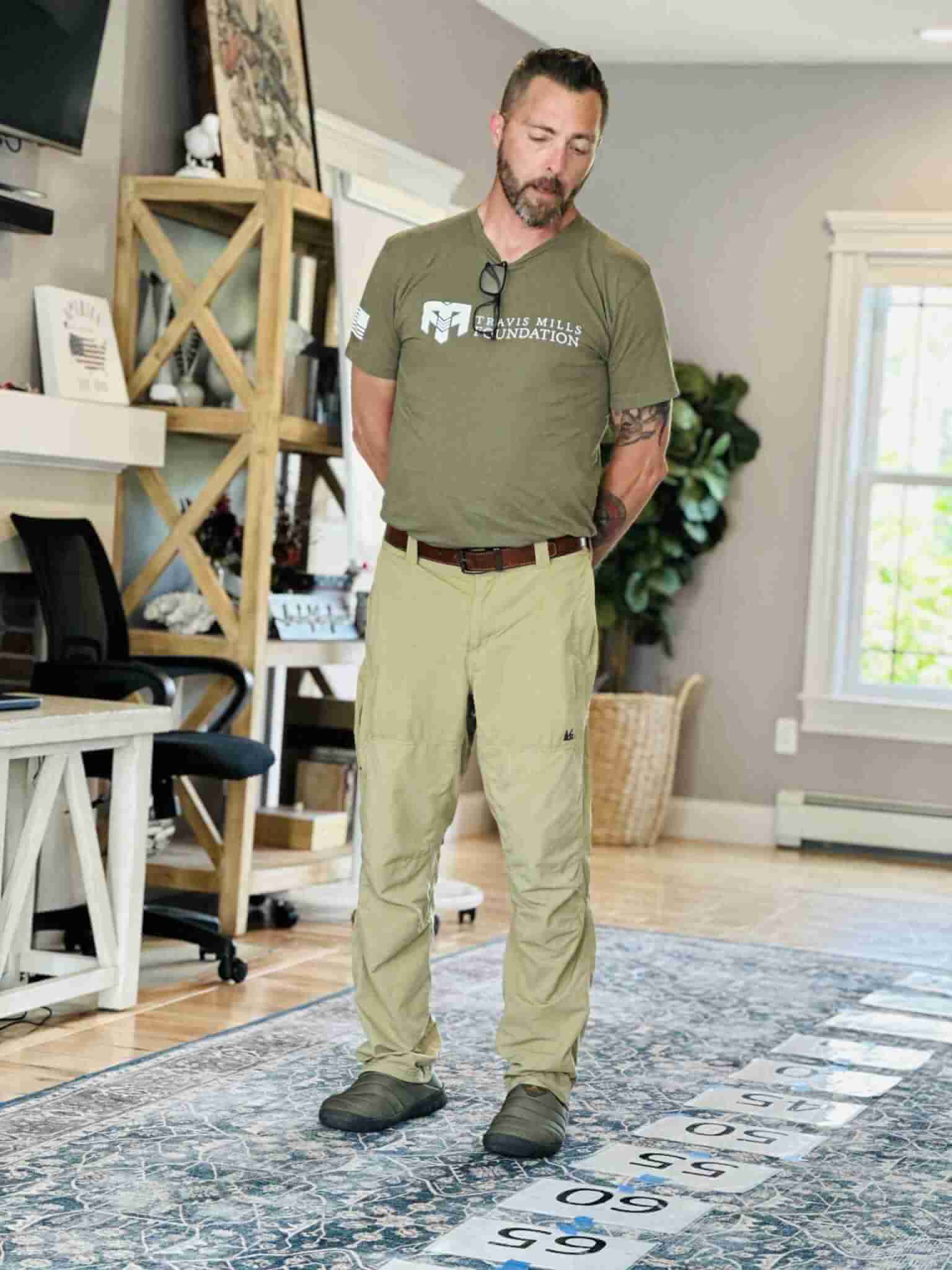
Shane demonstrates the Life Walk in the living room of the Travis Mills Foundation Veterans Retreat. In this exercise, students address past trauma and move forward with a new perspective on their life story, essentially “walking” toward a healthier, more positive future.
Shane wasn’t the only member of his family to serve in the U.S. Air Force. His brothers, uncles and more all served in the branch. Here he accepts an award for Honor Guardsman Of the Year for Selfridge ANGB and Michigan 2015.
A Life of Music
A professional musician for 35 years, Shane has played with Bob Marley, Todd Michael and the Ghost Town Marshalls, and his first band out of the military was with Mike Cross, guitarist and songwriter for the band Sponge.
“I recorded a full album in 2000. That was a really cool experience,” he said.
As a drummer, Shane incorporates music into his wellness routine.
“It’s good cardio,” he said. “I’m moving all four limbs, it increases my heart rate, and it’s also very meditative and emotive.”
When Shane is playing drums, he’s not thinking about anything else.
“Probably the most interesting thing about it is that I have Tourette’s Syndrome and cervical dystonia and the only other time I don’t twitch, other than sleeping, is when I’m playing drums,” he said.
Moving Forward
Shane said he doesn’t remember applying for Warrior PATHH training as he was most likely under the influence of drugs or alcohol. Shane couldn’t attend the 7-day, in-person initiation at the Travis Mills Foundation Veterans Retreat the first time he was contacted.
“I asked them to keep me on the list,” he said.
A musician, he was touring at the time.
“Thank god they did. I was having fun, but I wasn’t good.”
Shane’s PATHH journey got off to a rocky start. Travel delays caused him to miss the first day, including introductions from fellow students and PATHH Guides.
“It’s day 2 and we’re halfway through the morning and the Guides start talking about breathing exercises,” he said. “I slammed my hand on the table and left.”
He compared it to experiences in the past with doctors and therapists who weren’t helpful.
“I assumed we were going down that same road,” he said.
Shane didn’t sleep that night.
“The next morning I was at the firepit screaming at two Guides,” he said. Somehow they calmed me down and I became re-engaged.”
“I guess that helped shift gears,” Shane added. “I had sort of stared into the face of my own anger and realized that I was way more pissed off than I thought I was.”
Finding Purpose
Shane, now a Guide in the Warrior PATHH program at the Travis Mills Foundation, and said that despite his rocky start to the training, when he left, he knew he would be back.
“I always looked back at the situation of me dying in the Middle East in that clinic as my trauma, but it really wasn’t. The trauma really was the cervical dystonia that set in after that event,” he said. “That has been the biggest struggle of my entire life.”
“I feel like my life is better on every measure possible,” he said, while still acknowledging that struggle will always be part of life.
“Life still punches me in the face.”
However, Shane’s confidence in the program is unwavering.
“I’ve told people that if you go through this program and you get nothing out of it, I will give you $1,000 cash out of my pocket.