
Florida Family Tries New Adaptive Sports Both New and Familiar at Veterans Retreat

When Ian Prescott was injured in 2018 while serving with the Army’s Seventh Special Forces Group in Western Afghanistan, he didn’t know what life would look like for him, his wife Carrie, and their children.

However, through a recovery journey focused on holistic healing, a strong and pragmatic family structure, and a supportive community, they persevered.

Ian, who lives in Crestview, Florida, along with his wife and children, Aiden 16, and Jillian, 15, recently spent a week in the Belgrade Lakes Region of Maine at the Travis Mills Foundation Veterans Retreat where they found a new community of support.

The Travis Mills Foundation Mission

The Travis Mills Foundation supports post-9/11 recalibrated veterans and their families through various programs that help these heroic men and women overcome physical and emotional obstacles, strengthen their families, and provide well-deserved rest and relaxation.

We support these veterans through our nationally recognized Retreat located in the Belgrade Lakes Region of Maine. Veteran families who have been injured in active duty or as a result of their service to our nation receive an all-inclusive, all-expenses-paid, barrier-free experience in Maine where they participate in adaptive activities, bond with other veteran families, and enjoy much-needed rest and relaxation in Maine’s outdoors.

Afghanistan

During his third tour, Ian and fellow soldiers entered a village where they were met with heavy contact over the next several hours. They continued fighting through the village, eventually running into a rooftop ambush.

“In an attempt to spot them, I jumped up on a secondary rooftop nearby and they just happened to be looking right at me when I got there,” Ian said. “They shot me up underneath my arm on the left side of my chest. It went through my body, kind of in a zig-zag position, and ended up coming out of my lower back, ultimately paralyzing me below the waist.”

The Prescott family’s practicality kicked in when Carrie heard the news of her husband’s injury.

“‘How am I going to get to him? How am I going to take care of my family? What is our next step?’” were among the questions she had.

“Once I got to him, we were good. I was like, ‘We’ve got this. We’re going to communicate and we’re going to make it through,” she added.

Community

The community of Crestview, a population of less than 30K, stepped up in a big way to support the family. At the time, the Prescott children were 15, 14,11 and 9 years old.

“I was very lucky that my mom was already visiting when I got the news,” Carrie said. “I knew my children were taken care of: getting to soccer practice and school on time. Our friends and family in the area just really made sure that all of their needs were met.”

“Our community, our city, they just 100 percent banded together. I never had to worry about our kids so I could fully focus on Ian. That was amazing,” she added.

Recovery

Ian started his recovery at Brooke Army Medical Center in San Antonio, Texas, and then Shepherd Center Rehabilitation in Atlanta, Georgia. An urge to get home as soon as he could motivated Ian to return home in only four months.

The family’s experience at the Shepherd Center in particular stands out to both Ian and Carrie.

“The family was involved in every step of his rehab – teaching me and the children how to help Ian, how to take care of things, how to take care of his wheelchair,” Carrie said. “They not only made sure he knew what to do when he got home, they made sure we did too.”

When Ian did come home, the family adjusted well to their new normal.

“Now, the kids, they’ll roll around in my spare wheelchair and they’ll race each other and their friends. So yeah, now it’s just business as usual.”

The Travis Mills Foundation

Carrie first learned about the Travis Mills Foundation Veterans Retreat when she attended its Caregiver Program. She enjoyed it so much that the family decided to sign up for the Foundation’s flagship Family Program in summer 2024.
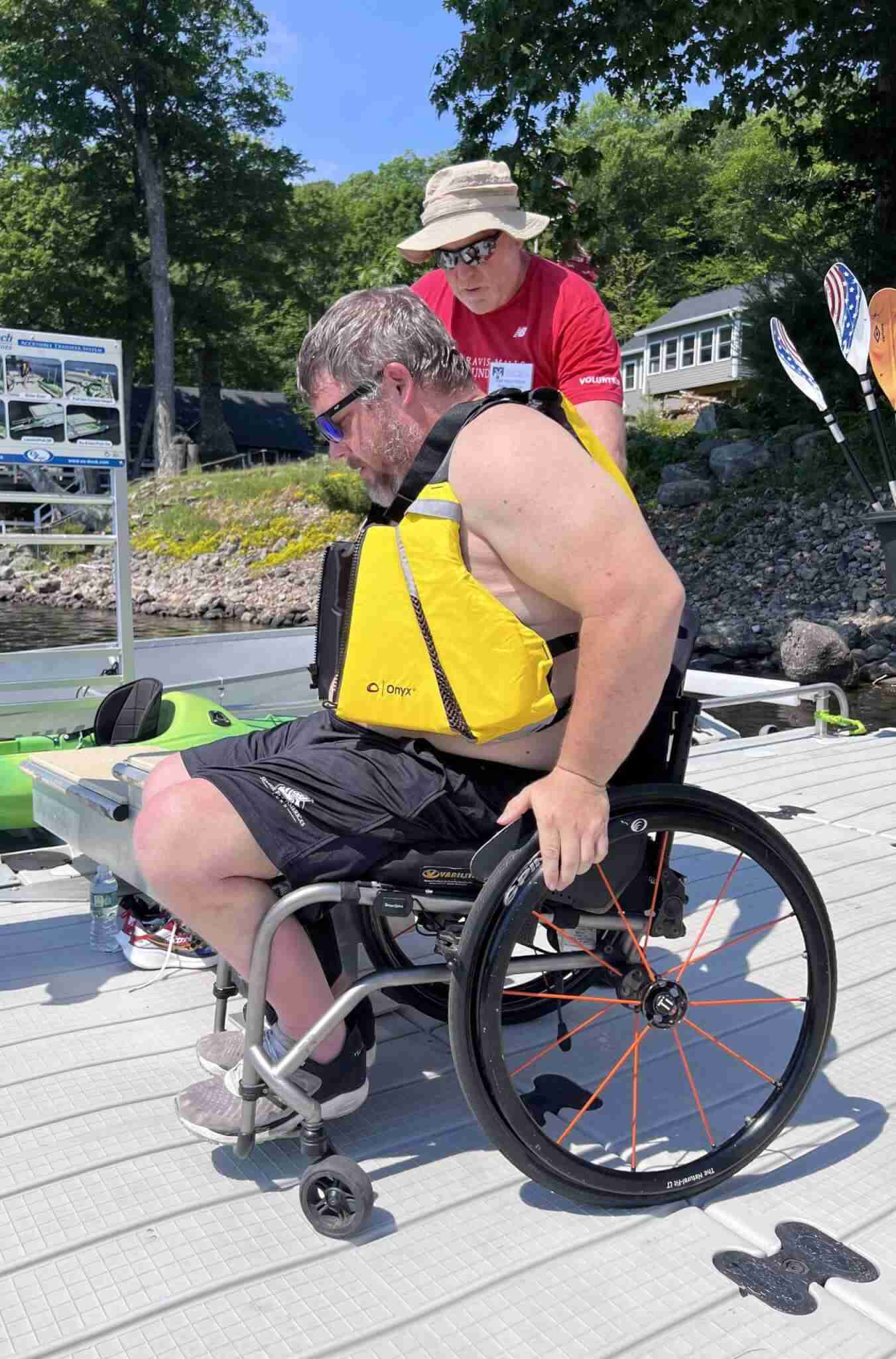
In early July, the Prescotts, who are already an active family, traversed the Retreat’s ropes course and rock wall, utilized the gym and indoor pool in the Health & Wellness Center, and enjoyed waterfront activities, including the opportunity for their children to fish for the first time.

In fact, Ian hadn’t kayaked since before his injury, an activity that was made a bit easier because of TMF’s adaptive kayak launch.

“(Kayaking post-injury) is a little different. The stakes are maybe a little higher if I flip or roll the kayak,” Ian said. “Not having complete control over your body makes that a weird sensation and raised my anxiety a little, so I was a little cautious right off the bat until I got used to it again.”
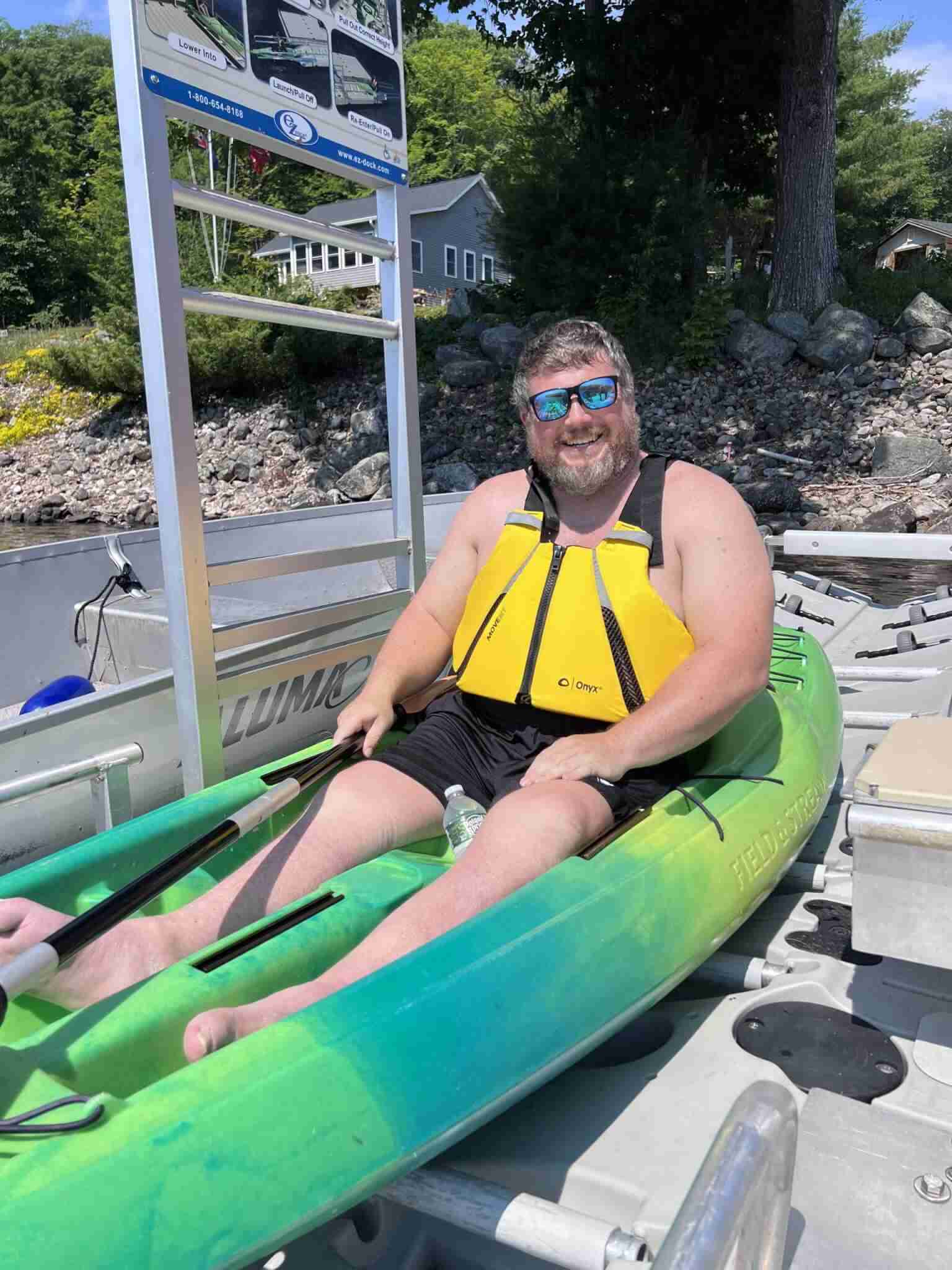
“I will say, kayaking without core muscles is much more difficult, but it was a lot of fun and good to be on the water again,” he added.

Carrie used the Center’s gym every day, finding a new love for cardio drumming. While their week-long experience could get tiring at times, they appreciated the fact that they were never pressured or required to do any activities.

“Being able to step back when you needed to made the experience even better,” Carrie said, adding that it was nice to be able to participate in activities without worrying about logistics.

“That was amazing for me and the kids,” she added. “We were able to go naturally into things and we don’t find that very often. That ease of life this experience allowed us was incredible.”

The Prescott family also came away with a number of ideas for activities they can do together at home from realizing the ease a pool lift would provide to Ian, new ways to work out and they’re also planning a family kayak trip.

Forever part of the Travis Mills Foundation Family, the Prescotts look forward to attending a winter Family Program together.

“During that first year after I came home from the hospital, it was all about doing everything as a family, with our children,” Carrie said. “But it was always hard to try to figure out how to do that, how to adapt. Our experience at the Travis Mills Foundation was stress-free and just seamless.”